



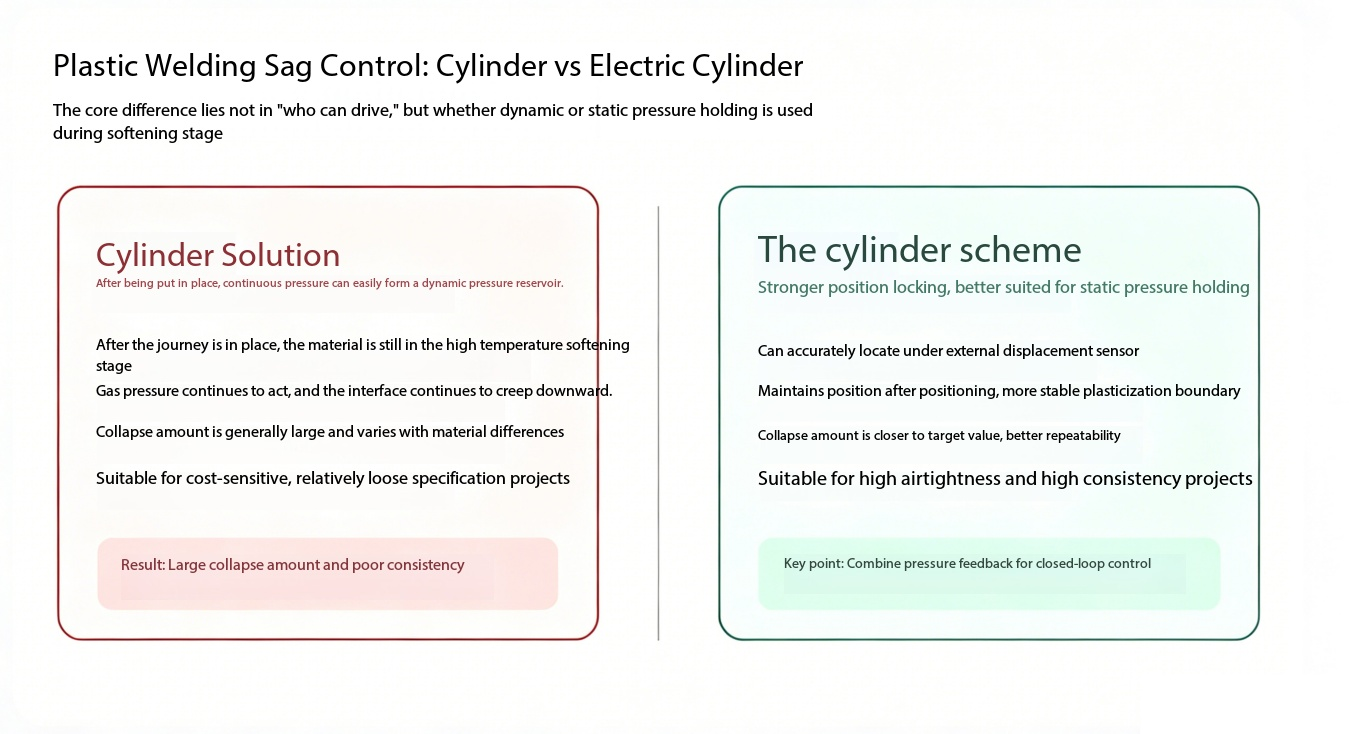
Figure 1: Core differences in the collapse control logic between pneumatic cylinders and electric cylinders
In plastic laser welding, the collapse amount is not merely a dimensional parameter but directly correlates with the weld's plasticity state, strength uniformity, and risk of air tightness.
The difference between electric cylinders and pneumatic cylinders often lies precisely in this critical phase where the material has softened but not yet fully cooled.
Why is the collapse volume prone to becoming uncontrollable?
Plastic welding is not a process that ends once the material reaches the desired state; rather, it involves continuous softening, plasticization, and sustained stress application.
When the interface enters a high-temperature viscous flow state, the material's stiffness decreases significantly. If the actuator continues to apply pressure, the material will undergo persistent creep and compression, leading to further expansion of the collapse volume.
Therefore, the key to controlling settlement volume lies not only in accurately measuring displacement, but also in determining whether dynamic or static pressure maintenance should be applied during the high-temperature softening stage.
Cylinder design: Simple structure, but prone to dynamic pressure maintenance.
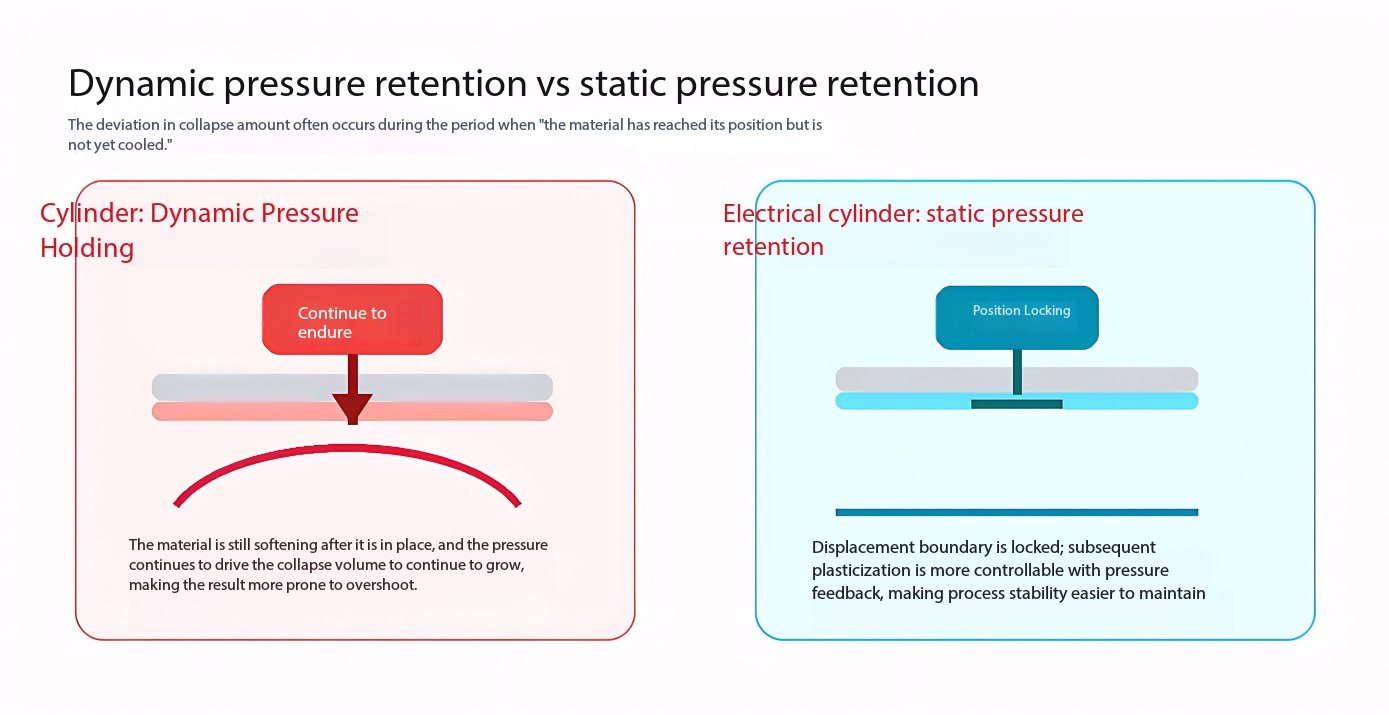
Figure 2: Process differences between dynamic pressure maintenance and static pressure maintenance
The advantages of the cylinder are clear:
• Low cost
• Mature structure
• Easy to maintain
• Suitable for general welding applications
However, cylinders also have inherent limitations when it comes to controlling settlement magnitude.
Even when external displacement sensors provide distance feedback, the material often remains in a high-temperature softening phase after the cylinder reaches its specified stroke. As pneumatic pressure continues to act, the welding interface remains compressed, and the system essentially operates under dynamic pressure maintenance.
This will lead to three typical outcomes:
1. The subsidence amount is usually greater than the target value.
2. The greater the material difference, the more pronounced the fluctuation in settlement amount becomes.
3. The same displacement endpoint does not necessarily correspond to the same plasticization state.
4. Differences in the actual ultimate explosive strength of products
Cylinders are not incapable of achieving collapse volume control; rather, it is challenging to maintain sufficiently consistent collapse volumes during the high-temperature softening phase. This approach may be acceptable for products requiring a loose fit, but for applications demanding high air tightness and uniformity, the risks significantly increase.
Electric cylinder solution: Provides precise positioning and is more suitable for static pressure maintenance.
The advantage of the electric cylinder lies in its superior position control capability.
With the assistance of high-precision external displacement sensors, the hydraulic cylinder can maintain position locking upon reaching the target location, enabling the material to undergo subsequent plasticization within the controlled displacement range—essentially achieving static pressure maintenance.
The value of this approach lies in:
• The subsidence amount is closer to the target value
• More stable during the plasticization process
• Higher consistency across different batches of materials
• More suitable for products with stringent requirements regarding weld dimensions and air tightness
For projects requiring strict control of weld height and narrow tolerance ranges for collapse, electric cylinders generally offer greater advantages.
The electric cylinder is not inherently perfect; the real challenge lies in its control logic.
Many projects assume that simply improving positioning accuracy will automatically resolve collapse issues after switching to electric cylinders. However, the reality is far more complex.
During material softening, the pressure is not constant. When material stiffness decreases, if the hydraulic cylinder continues to advance at a fixed speed, interfacial pressure will exhibit significant fluctuations. Such pressure fluctuations inevitably alter the plasticization state, ultimately affecting both the final collapse volume and weld quality.
Therefore, the true technical challenge of the electric cylinder solution lies not in the mechanical components themselves, but in software control.
• Real-time acquisition of pressure sensor signals is required
• The output needs to be dynamically adjusted based on the material's softening state
• Closed-loop coordination between displacement control and pressure stabilization is required
• Appropriate control parameters need to be established for different materials.
In simple terms, the electric cylinder ensures precise positioning; however, achieving a truly stable welding process requires the control system to incorporate pressure feedback capabilities. Only in this way can both positional boundaries be maintained during the material softening phase and pressure instability be prevented.
Why is process curve monitoring essential for hydraulic cylinders?
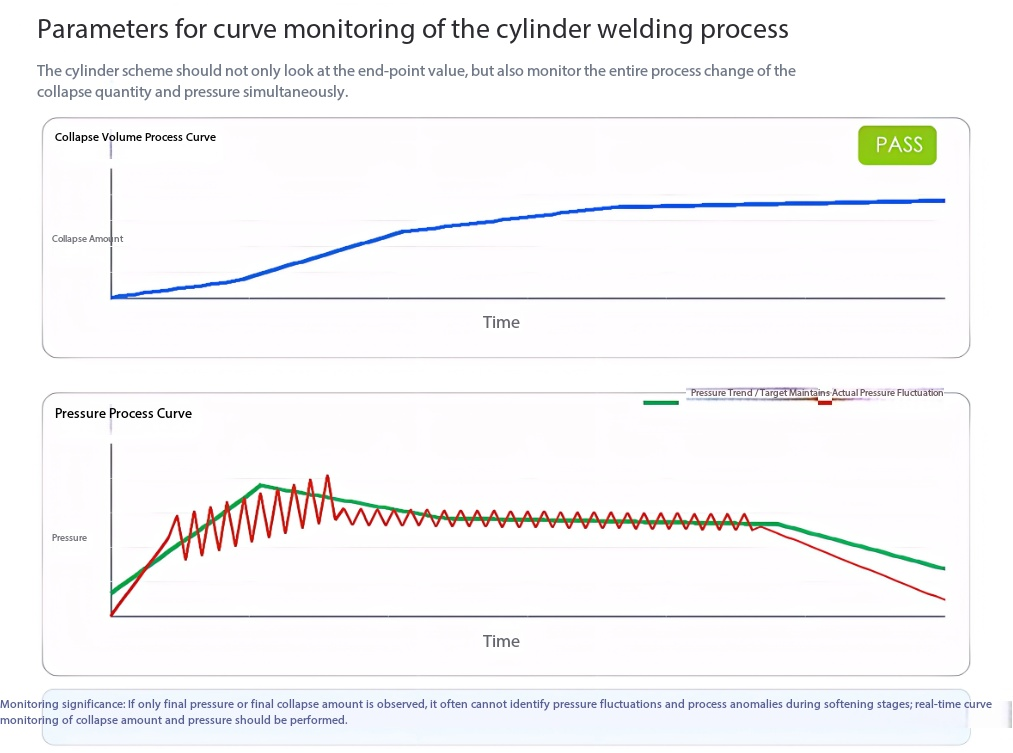
Figure 3: Schematic illustration of the process curve monitoring for collapse amount versus pressure during hydraulic cylinder welding
When using hydraulic cylinders, pressure monitoring should not only focus on outcome measurement but also include process curve monitoring.
In traditional cylinder systems, many projects focus solely on whether the final pressure is achieved and whether the final collapse volume meets specifications, essentially emphasizing outcome evaluation. Since cylinders operate in continuous pressure-supply mode, even minor fluctuations detected during operation are difficult to correct in real time.
However, electric cylinders are different; their true value lies in their superior control capabilities. Therefore, one should not focus solely on the final measurement value but rather assess whether the entire welding process remains stable. Particularly after the material enters the softening stage, factors such as pressure fluctuations, whether the collapse volume increases as expected, and the stability of the pressure maintenance phase all directly impact the final weld quality.
This is precisely why, in the hydraulic cylinder solution, the collapse amount and pressure should ideally be monitored simultaneously in real time.
The settlement curve can determine whether the plasticization and subsidence processes of the material are continuous and controllable.
The pressure curve can identify the presence of shocks, oscillations, or abnormal releases during the softening phase.
• Only by analyzing the correlation between the two curves can it be determined whether the welding meets the required standards or if the process is truly stable.
In many cases, the final collapse volume alone may appear satisfactory, yet significant fluctuations in stress during the process have already occurred. Although such welds may meet dimensional requirements, their weld joint plasticity uniformity, strength consistency, and air-tightness stability may not be reliable.
Therefore, the genuine advancement of the electric cylinder solution lies not merely in replacing the actuator with an electric cylinder, but in upgrading welding control from outcome monitoring to process monitoring and control. Only in this way can the positioning advantages and closed-loop control capabilities of electric cylinders be fully realized.
Which is more suitable: a hydraulic cylinder or an electric cylinder?
Contrasting Item | Cylinder | electric actuator |
Pressure Holding Method | Dynamic Pressure Maintenance | Static Pressure Maintenance |
Collapsing volume representation | Tend to be large with significant fluctuations | More easily convergent and exhibits better stability |
Key Monitoring Areas | Result-based monitoring is the primary approach. | Emphasize real-time monitoring of process curves |
Control Challenges | It is difficult to prevent further subsidence during the high-temperature softening stage. | A stable pressure feedback closed-loop is required. |
Implementation Difficulty | low | Gao |
applicable scene | General precision and cost-sensitive items | Projects with high consistency, high air tightness, and high reliability |
Work Beat | fast | Slightly slower than the cylinder |
Conclusion
The difference between hydraulic cylinders and electric cylinders extends beyond cost and precision; their control logic for the welding softening phase is entirely distinct.
During pressure delivery by a hydraulic cylinder, even with displacement feedback, materials still undergo continuous deformation under high temperatures, leading to significant and unstable settlement. In contrast, an electric cylinder enables precise positioning, transforming the welding process from dynamic pressure maintenance to static pressure maintenance, thereby ensuring more predictable settlement control.
However, the hydraulic cylinder solution imposes higher demands on the control system. Without pressure sensor feedback and a stable software-based closed-loop system, the positioning advantages of the hydraulic cylinder cannot be effectively translated into process benefits.
More importantly, the electric cylinder must not rely solely on the final measurement value but should simultaneously monitor the entire process curves of settlement and pressure. Only when both the final measurement value and process stability meet the requirements can welding quality be truly controlled.
 Home
Home Products
 Telephone
 Message


