


For many years, the laser plastic welding industry has adhered to a prevailing judgment criterion: if there are no leaks and sufficient tensile strength, the weld is considered flawless.
However, as OCT (Optical Coherence Tomography) begins to enter the realm of online comprehensive diagnostics, a previously overlooked issue is becoming increasingly apparent:
The "qualified parameters" defined by traditional validation methods may not necessarily represent truly optimal welding parameters.
Especially in high-reliability applications such as nylon pipelines, fluid joints, and thermal management circuits, OCT is more than just a detection device; it is driving laser plastic welding from an "empirical process" toward "structure-level precision manufacturing."
1. How are traditional welding parameters established?
In the current industry, typical parameter validation methods for laser welding of nylon (PA) pipelines and fittings generally include:
· Air tightness test
· Tensile strength test
· Blasting Test
· Weld slice analysis
Based on these test results, the company will adjust parameters such as laser power, scanning speed, and clamping pressure to identify an optimal process window that ensures consistent test performance, before implementing it in mass production.
There's nothing inherently wrong with this process. The issue lies in its focus on verifying the final outcome rather than the weld structure itself.
In other words, traditional testing can determine whether a product has leaks or sufficient tensile strength, but struggles to ascertain whether a stable, continuous fusion structure has truly formed within the weld seam for long-term service.
II. Why do traditional craft windows appear so wide?
This is a aspect that is frequently misinterpreted in laser plastic welding. Particularly in nylon piping and fitting products, axial interference fit, radial interference fit, and pre-tightening of pipe components are commonly present prior to welding.
This indicates that even with insufficient welding energy, the pipe fitting may still remain properly sealed; it can maintain a tight seal for a short period of time; and the tensile strength test may not immediately show a significant decline.
This leads to a typical phenomenon:
Various welding parameters ultimately yield nearly identical test results.
This makes the original process window appear quite broad. However, certain parameters within it essentially merely exhibit "temporarily undetected issues." These may include localized insufficient plasticization, discontinuous melt zones, minute voids, or even material degradation due to excessive temperature rise—phenomena that are only temporarily unmeasurable and not observable through conventional testing methods.
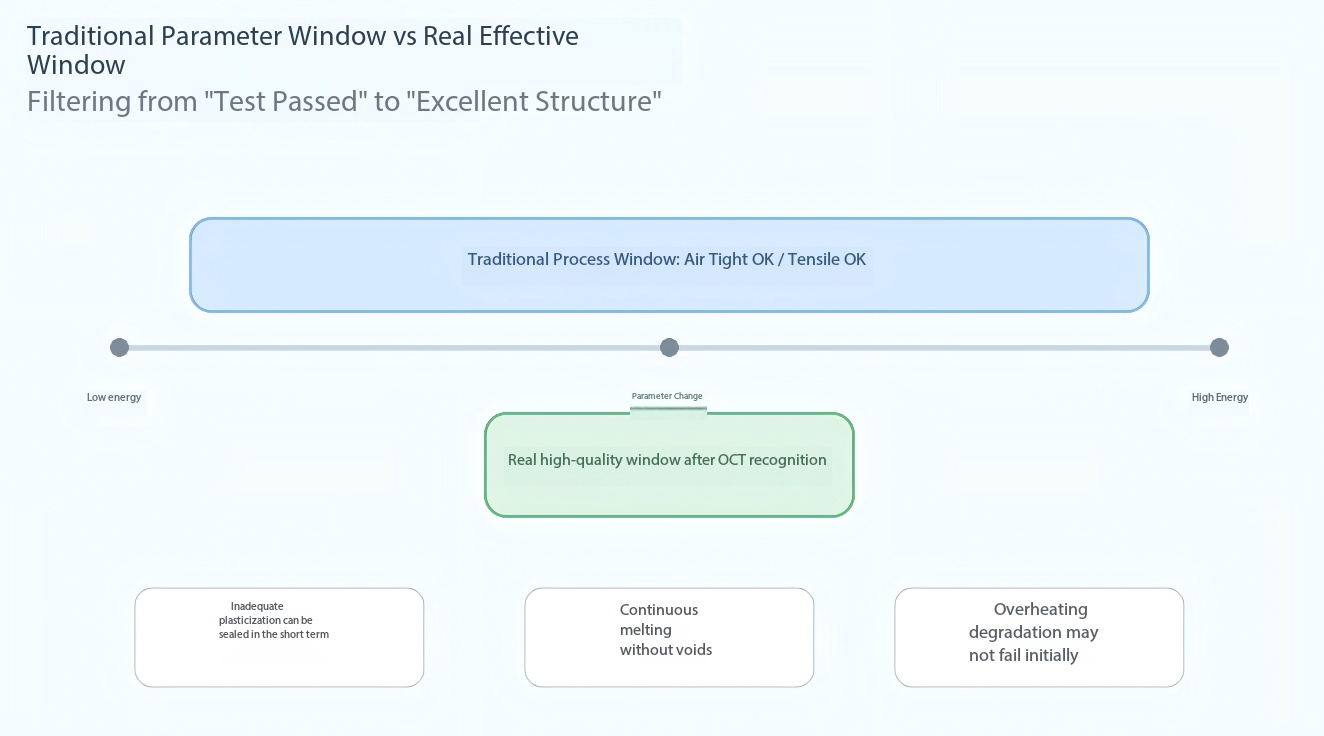
Figure 1 | Traditional testing identifies windows that merely "pass," whereas OCT further detects those with truly exceptional structural quality.
III. The factors that truly determine long-term reliability are often the defects most difficult to detect with traditional testing methods.
A key characteristic of laser plastic welding is that many defects do not cause immediate failure of the product but gradually manifest over prolonged service.
1. Local thermal degradation due to excessive temperature
When laser energy is excessively high, nylon molecular chains may be damaged, leading to localized brittleness and a reduction in long-term pressure resistance.
More problematic is that initial air tightness may be normal, and the initial tensile strength may even be higher. Cracks and leaks only gradually become apparent after exposure to thermal cycling, pressure cycling, or immersion in chemical media.
2. Insufficient plasticization
When welding energy is insufficient, the upper and lower materials fail to achieve adequate molecular fusion, resulting in a weld that resembles mere contact rather than true integration.
In the short term, it may still remain sealed and pass basic tensile tests. However, under long-term fatigue conditions, its reliability will significantly decline.
3. Microchambers/Vacuoles
During the plasticizing process, uneven pressure distribution, inadequate venting, or excessive heating rate may lead to the formation of micron-scale voids and localized bubbles.
These defects are invisible to the naked eye and may not be detected by air-tightness tests, yet they can serve as the origin of chronic leaks and structural fatigue.
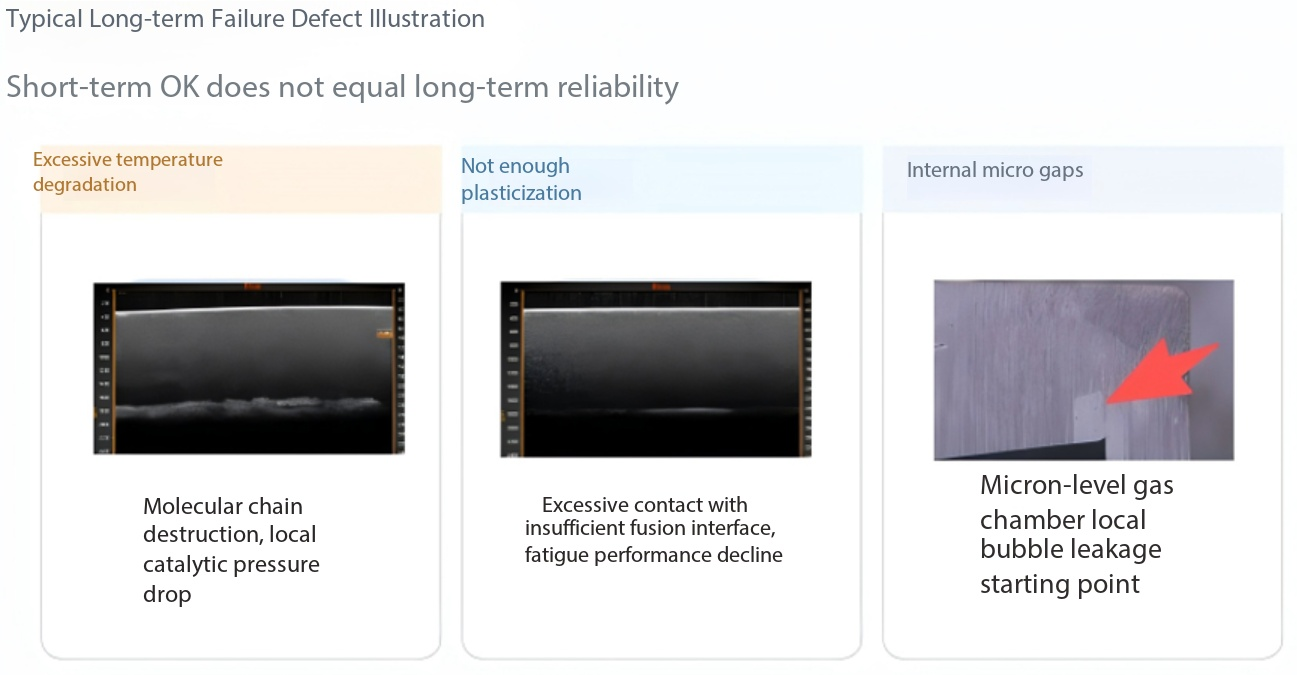
Figure 2 | Short-term compliance does not guarantee long-term reliability. Overheating-induced degradation, insufficient plasticization, and internal micro-vacuoles can all compromise the weld's long-term performance.
IV. The advent of OCT has enabled the first quantitative measurement of "actual welding structures".
Historically, process optimization relied primarily on experience, random sampling, and destructive testing. The greatest significance of OCT lies in enabling real-time visualization of the internal structure of welded components.
Using OCT, engineers can directly observe and quantify:
· Is the melting zone continuous?
· Are there any internal gaps?
· Is the welding depth uniform?
· Is there any abnormal subsidence?
· Is the weld interface truly fused?
This will bring about a fundamental change.
In the past, meeting parameter requirements often meant "no leaks." Today, it further implies that "the welded structure itself is sufficiently robust."
This isn't just a minor upgrade to the detection method, but a fundamental shift in its underlying logic.
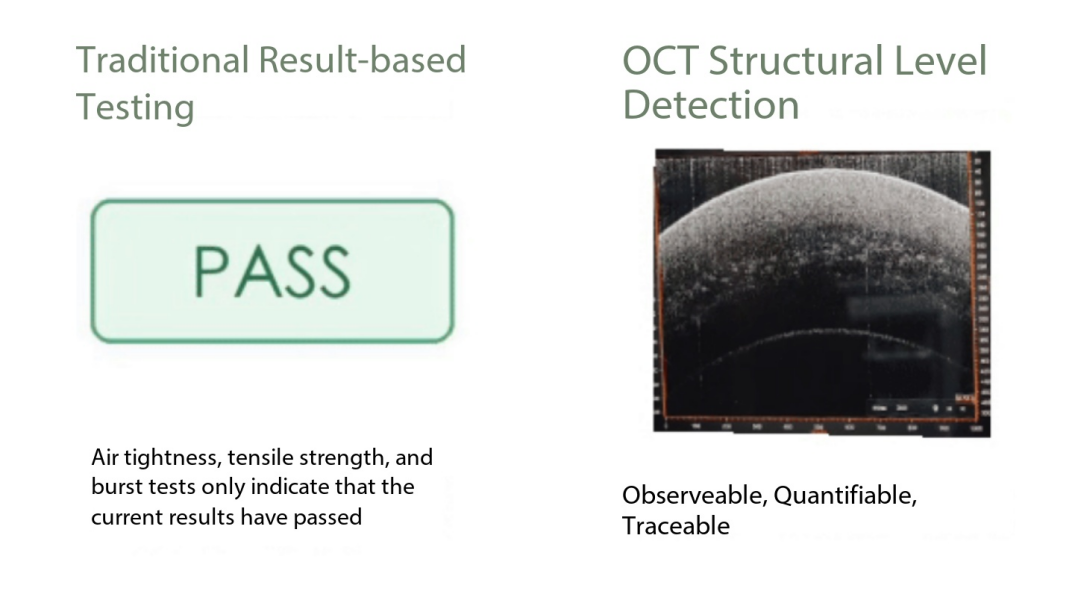
Figure 3 | While traditional inspection methods primarily assess overall results, OCT transforms the internal structure of welds into a observable, quantifiable, and traceable entity.
5. When the OCT begins full inspection, the welding equipment itself will also be redefined.
Many individuals initially perceive OCT as a "more advanced diagnostic tool." However, when OCT is integrated into comprehensive online diagnostics, it actually drives the reverse upgrade of the entire laser welding system.
Problems previously masked by outcome-based tests such as air-tightness and tensile strength are all revealed under micron-scale structural inspection.
Laser Power: From Set Value to Actual Stability
The focus in the future should not be on "what the set power value is," but rather on actual output power, dynamic fluctuations, and long-term drift. Even minor power variations are reflected in the weld structure.
Spot distribution: From sufficient energy to uniform energy distribution
Previous systems primarily focused on whether the power output was sufficient. However, OCT further reveals issues such as uneven light spot distribution, energy center shift, and abnormal heat distribution at the edges, all of which directly affect the continuity of the melting zone.
Temperature feedback: From approximately to, with controllable progression
Temperature is no longer just a measurement value. Temperature rise curves, peak temperatures, and cooling processes all require more precise control.
Musculoskeletal system: From running trajectories to micrometer-level repeatability
Scanning mirror synchronization, circular trajectory accuracy, velocity fluctuation, and repeat positioning accuracy are all magnified in the OCT image. Device precision is no longer merely a numerical value on the equipment specification sheet but directly constitutes an integral part of weld quality.
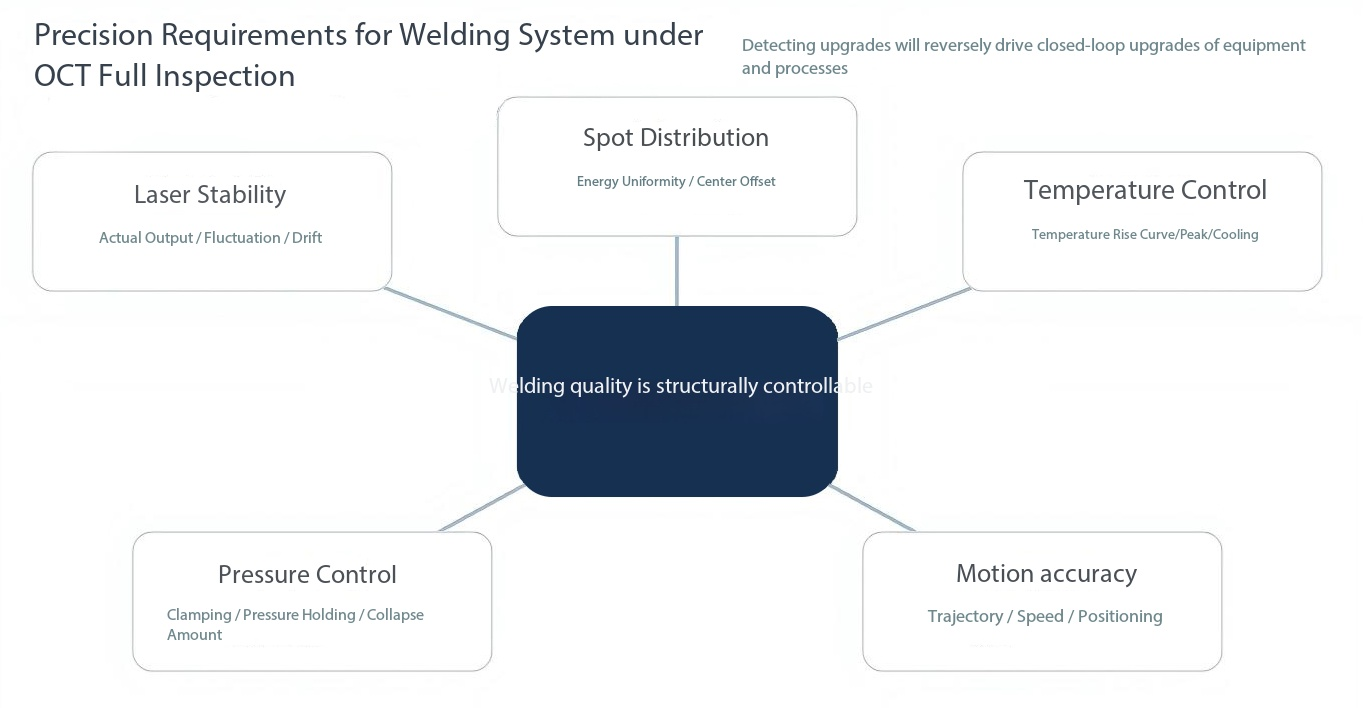
Figure 4 | The comprehensive OCT inspection system integrates laser stability, spot distribution, temperature control, motion accuracy, and pressure control into a closed-loop quality control system.
VI. From "Manufacturing with Probabilities" to "Fully Controllable Manufacturing"
In the past, the plastic welding industry relied heavily on process expertise, a wide parameter range, and random quality inspections.
The value of OCT lies in its pioneering integration of plastic welding into "structural-grade quality control":
· Welded structures can be quantified.
· Process parameters can be optimized
· Defect risks can be traced.
· Mass production quality can be controlled in a closed loop.
This means that welding is no longer merely "good enough," but is progressively becoming truly quantifiable, optimizable, and traceable.
7. In the short term, it reflects rising costs; in the long term, it signifies industry upgrading.
Many may ask: Does including comprehensive OCT examination not increase the cost?
This is indeed the case in the short term, as equipment requirements are more stringent, the process window narrower, and control precision more demanding.
But in the long run, it doesn't merely lead to higher costs—it raises the barrier for plastic welding to enter higher-value application scenarios.
· New Energy Vehicles
· Energy Storage System
· AI Data Center Liquid Cooling System
· Medical Fluid Systems
· High-reliability industrial fluid control systems
What these industries truly need is not merely the ability to weld, but long-term reliability and complete controllability.
epilogue
The true value of OCT lies not merely in adding a diagnostic tool, but in driving a fundamental transformation across the laser plastic welding industry.
From "experience-based manufacturing" to "structure-level precision manufacturing".
In the future, true competitiveness will no longer lie solely in "being able to weld plastics," but rather in who can genuinely control the internal structure of the welded components.
 Home
Home Products
 Telephone
 Message


