



In the field of laser plastic welding, the value of temperature closed-loop control is being increasingly recognized across various high-end manufacturing applications. Particularly in high-reliability sealed products such as automotive electronics, medical consumables, fluid pipelines, and sensor housings, temperature closed-loop control has evolved from an ancillary feature into a critical capability that determines process stability.
However, in quasi-simultaneous laser plastic welding, there remain misconceptions within the industry regarding the concept of "constant temperature feedback." Many controversies arise not from entirely incorrect conclusions, but rather from a failure to systematically understand the relationship between heat field formation, material fluctuations, and control responses based on the thermal fundamentals of quasi-simultaneous welding.
This paper elucidates the core principles of quasi-synchronous constant-temperature feedback by examining its process mechanisms, closed-loop control boundaries, material defect amplification mechanisms, and future directions in predictive control.
1. Why Constant Temperature Feedback Must Be Introduced in Quasi-Synchronous Welding
In traditional contour welding, the laser performs one or a few scans along the weld seam, resulting in pronounced localized instantaneous heating, a narrow process window, and susceptibility to material variations, assembly tolerances, and energy non-uniformity.
The fundamental principle of quasi-synchronous welding differs: it employs a high-speed galvanometer to perform multiple rapid cyclic scans of the laser beam along the weld seam, gradually bringing the entire welding area close to a state of "synchronous heating."
Therefore, the essence of quasi-synchronous welding lies not in instantaneous melting at a single point, but rather in:
· Total cumulative heat in the welding area
· Multiple scans form thermal superposition
· The entire weld seam gradually reaches a state of melting equilibrium.
· Complete the welding process under thermal equilibrium conditions.
This means that quasi-synchronous welding is fundamentally a dynamic thermal field control problem, rather than a simple point-energy control issue.
For this very reason, the significance of constant-temperature feedback extends beyond merely "measuring a single point's temperature"; it involves real-time regulation of the entire welding thermal system to maintain a stable equilibrium among heat input, heat dissipation, material absorption, and fixture cooling.
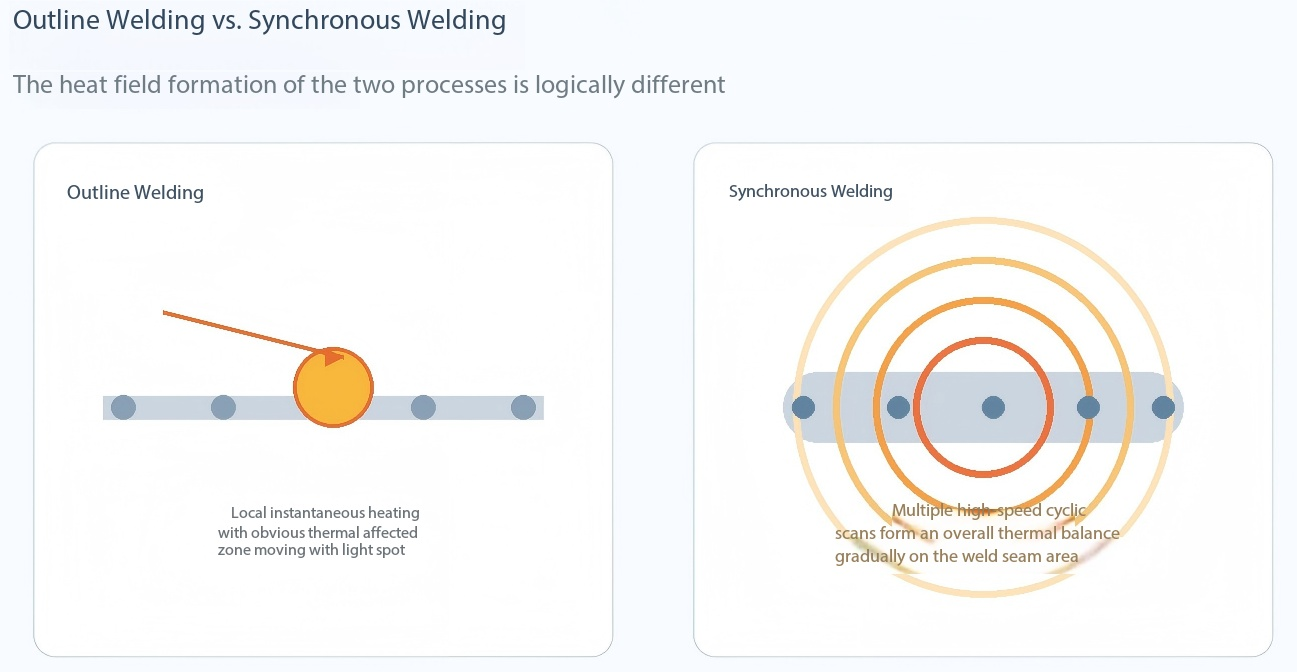
Figure 1 | Contour welding more closely resembles localized instantaneous heating, whereas quasi-synchronous welding achieves overall thermal field equilibrium through multiple high-speed scans.
II. Misconception 1: High-speed scanning involves latency, rendering constant-temperature closed-loop control meaningless
This is a very common misconception in the industry today.
On the surface, this argument appears reasonable: the galvanometer scanning speed is extremely high, resulting in a very short dwell time for the light spot; infrared temperature measurement involves sampling intervals, and power regulation also has response times. Consequently, some argue that by the time the laser has moved beyond its current position, the temperature feedback signal has only just arrived, rendering closed-loop control ineffective.
The problem with this perspective is that it still interprets quasi-synchronous welding through the lens of "single-point processing."
In the quasi-synchronous process, a single scan does not complete welding. The same location is scanned dozens or even hundreds of times, with heat continuously accumulating within the material and gradually forming a unified thermal field in the weld area. Therefore, the temperature control system regulates not a specific instant but the dynamic equilibrium of the entire weld thermal field.
This dynamic balance includes:
· Heat absorption efficiency
· Heat diffusion velocity
· Differences in thermal conductivity of materials
· Environmental Heat Dissipation
· Jig heat sink effect
· Fluctuations in material transmittance
Therefore, constant temperature feedback does not involve "point-by-point instantaneous correction," but rather provides continuous and stable control of the welding system's thermal state. Even with millisecond-level response delays, the temperature closed-loop system can significantly improve welding consistency, fusion depth stability, surface quality, sealing reliability, and process window width.
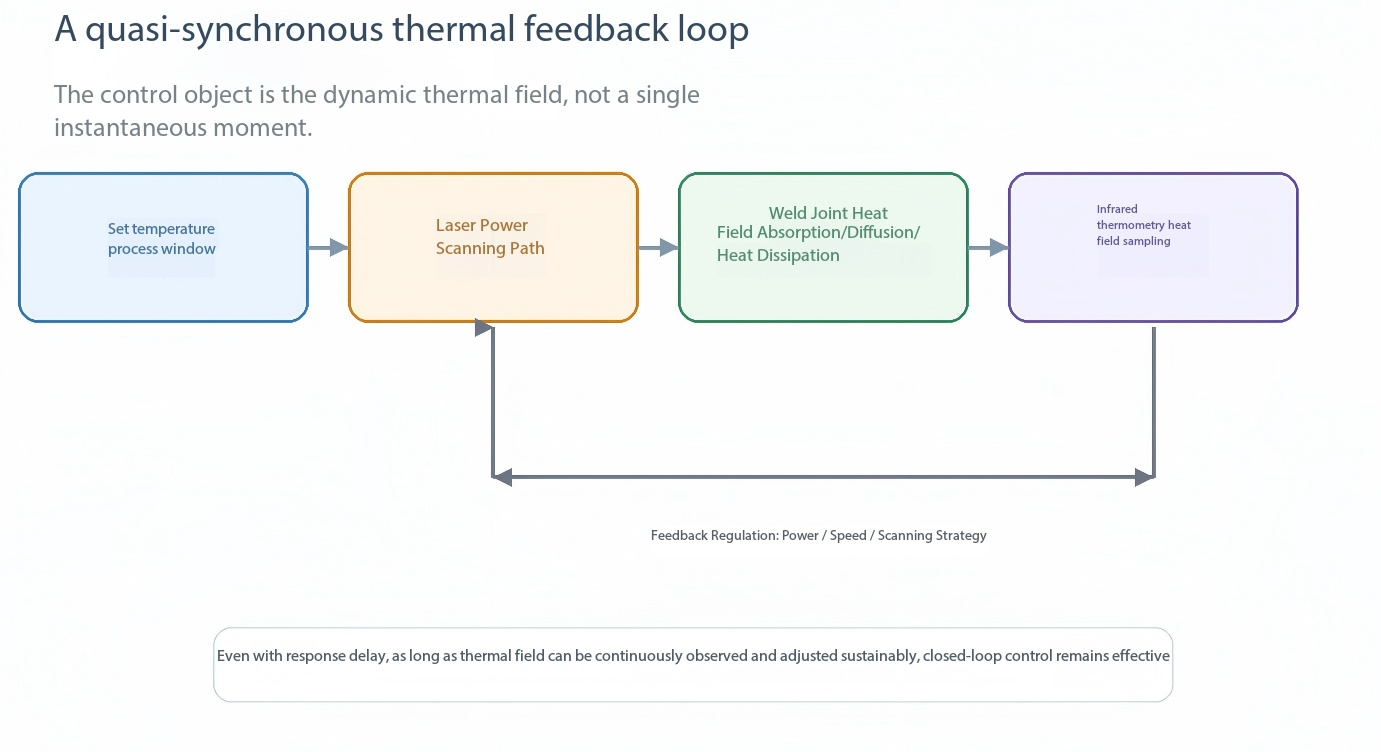
Figure 2 | The control object of constant-temperature feedback is not a single light point, but a dynamic thermal field composed of scanning, absorption, diffusion, and heat dissipation.
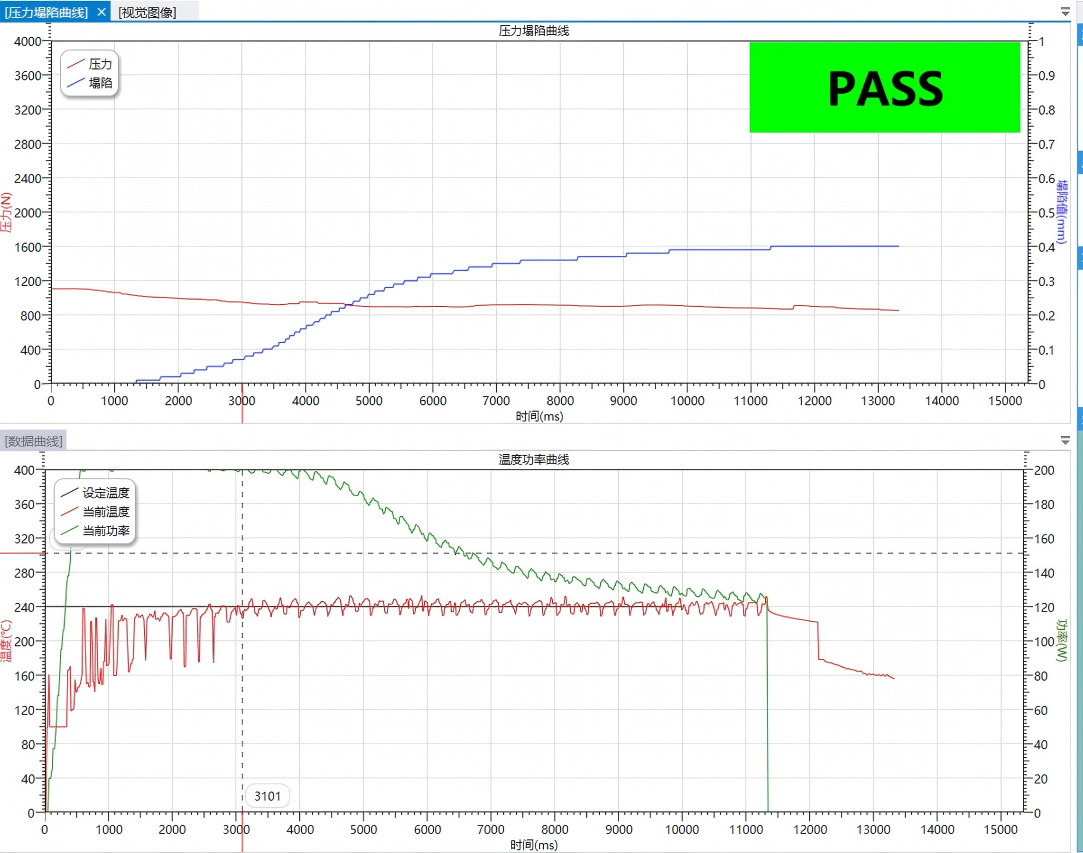
Figure 3 | Feedback interface of the Weikrui Photoelectric quasi-synchronous temperature control system (green indicates power level, red indicates welding temperature)
III. Misconception 2: Local burns cannot be completely avoided, thus the significance of constant temperature feedback is limited
In actual production, it is common to encounter a situation where overall temperature control appears normal, yet localized areas of the weld still exhibit yellowing, carbonization, or scorching.
Therefore, some argue that since closed-loop control cannot address localized anomalies, the significance of constant-temperature feedback is quite limited.
In fact, this reflects the boundary issue between "system thermal control" and "local material defects."
Thermal feedback can stabilize the overall thermal input and reduce temperature drift caused by equipment fluctuations, path variations, or heat dissipation differences. However, if the material itself exhibits localized fiber floating, black spots, impurities, abnormal local absorption, or injection molding defects, specific regions may exhibit abnormal heat absorption during welding, potentially leading to thermal runaway.
In other words, constant temperature feedback is not a universal compensator. It addresses issues related to the thermal field stability of the system, rather than replacing material quality control, injection molding quality control, or light transmittance testing.
IV. Quasi-synchronous welding is essentially a systems engineering approach
To achieve truly highly stable quasi-synchronous welding, relying solely on the welding equipment itself is insufficient; it requires multiple components working together to form a complete quality control loop.
The primary consideration is material stability, encompassing batch consistency of injection-molded products, carbon black content, glass fiber proportion, moisture content, and additive distribution. Any fluctuation in these parameters can adversely affect laser absorption efficiency and thermal diffusion behavior.
Secondly, injection molding quality control is critical. Issues such as glass fiber exposure, shrinkage marks, silver streaks, internal stress, and localized crystallization abnormalities can all alter the local thermal response of the weld area.
The third method is full-weld transmittance inspection. By conducting full-weld transmittance testing on the upper transparent component, material anomalies such as impurities, black spots, uneven light transmission, and glass fiber agglomeration can be identified early, thereby reducing the risk of localized overheating at the source.
Therefore, constant temperature feedback is not an isolated technology but a core component of the entire quality control system. It must work in concert with incoming materials, injection molding processes, inspection systems, fixtures, equipment, and process databases to achieve truly stable, quasi-synchronous welding performance.
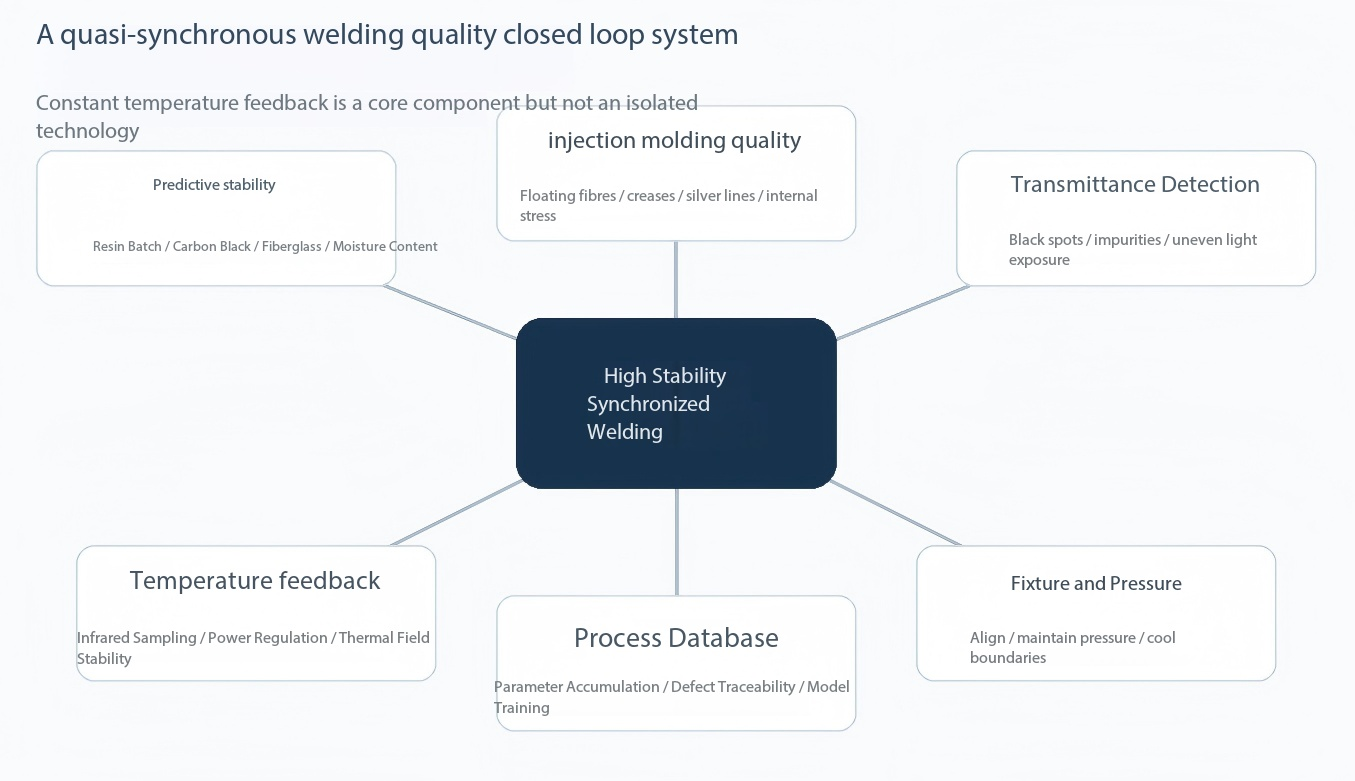
Figure 4 | High-reliability quasi-synchronous welding is not the capability of a single device, but a systematic engineering approach comprising materials, injection molding, inspection, fixtures, temperature control, and process databases.
V. Misconception 3: Why do burns still occur after performing a comprehensive light transmittance test?
This is the most common question that many customers encounter during actual implementation.
The reason lies in the fact that transmittance measurement does not possess "infinite precision." Any visual or optical detection system has inherent limitations regarding resolution, dynamic range, sampling error, and detection threshold.
For example, localized floating fibers smaller than 0.1 mm, minute impurities, or minor absorption anomalies may not be reliably detected. However, during welding, as the material temperature rises, localized heat absorption intensifies, thermal accumulation increases, and material carbonization progresses, leading to a further rise in absorption rates and ultimately resulting in thermal runaway.
This is why many minor defects are amplified during the welding process.
Therefore, comprehensive transmittance testing can significantly reduce risks, but it cannot be equated with complete risk elimination. A more accurate understanding is that transmittance detection serves for preliminary screening, temperature feedback ensures process stability, while next-generation predictive control enables proactive intervention against localized abnormal trends.
VI. Why glass fiber materials are more prone to localized burns
In high-GF (glass fiber) materials, localized burn damage is particularly pronounced.
The underlying reason is that exposed glass fibers alter the local refractive index, leading to abnormal laser scattering, localized energy concentration, and uneven thermal diffusion. Additionally, floating fibers formed during injection molding further modify the thermal properties of the material surface upon heating.
Therefore, many burn-related issues are fundamentally not merely matters of welding parameters, but rather stem from material properties and injection molding processes.
For high-reliability products, relying solely on welding compensation is insufficient. Systematic control is still required across multiple aspects, including injection molding processes, glass fiber distribution, material uniformity, and surface fiber floating probability.
VII. Misconception 4: If floating fibers cannot be completely avoided, is there no solution?
The answer is no.
Fluctuations in fiber length, material variations, and localized absorption anomalies are difficult to eliminate entirely; however, this does not imply that there is no room for further process improvement. On the contrary, this precisely represents the breakthrough direction of next-generation quasi-synchronous welding technology: evolving from "global thermal field feedback" to "point-by-point intelligent control based on thermal field prediction."
VIII. Evolving from "System Feedback" to "Predictive Point-by-Point Feedback"
Traditional temperature control systems focus primarily on overall thermal field management, whereas the next-generation technological approach integrates infrared thermal imaging, precise weld coordinate positioning, process databases, and AI-powered predictive control.
Its core logic comprises four levels.
First, infrared thermal imaging enables real-time monitoring of the weld heat field. It not only measures overall temperature but also identifies localized abnormal heating, hot spot formation, temperature zone shifts, and abnormal heat diffusion patterns.
Second, link the spatial position of the weld seam to the temperature field to achieve weld coordinate positioning, temperature zone mapping, and thermal anomaly tracking.
Third, train the AI model using extensive welding data to enable the system to gradually identify which thermal variations indicate impending burns, which areas may contain floating fibers, and which temperature trends signify hazardous conditions.
Fourth, adjust energy input in advance before thermal runaway truly occurs, such as reducing local power, modifying the scanning frequency, altering the local dwell time, or dynamically adjusting the energy density.
The limitation of traditional closed-loop systems lies in the fact that "when an anomaly is detected, it has often already occurred." The objective of predictive control is to intervene proactively before an anomaly escalates into a failure.
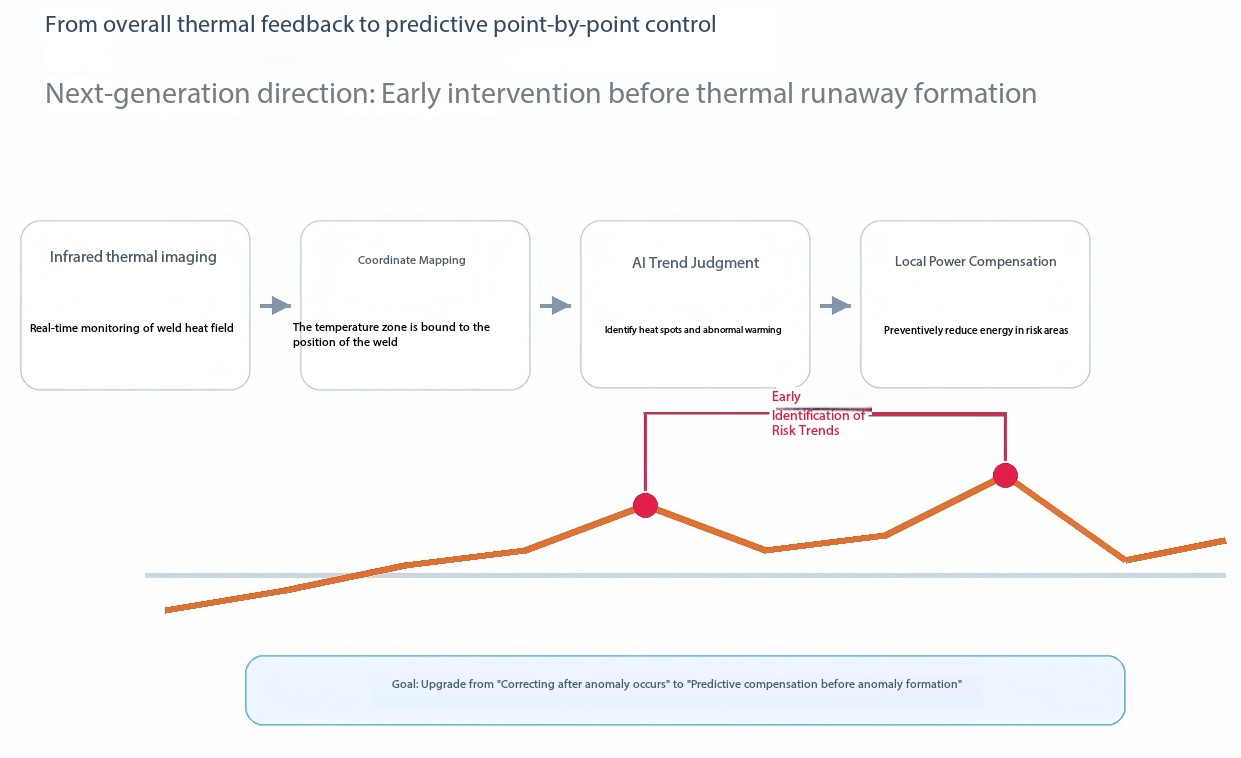
Figure 5 | The next-generation quasi-synchronous temperature control technology will evolve from a comprehensive closed-loop temperature system to predictive control incorporating thermal imaging, coordinate mapping, AI-based decision-making, and local power compensation.
IX. Future Development Trends of Quasi-Synchronous Isothermal Technology
The future of quasi-synchronous laser plastic welding will no longer merely consist of a combination of a laser and a viewfinder, but will evolve into a comprehensive intelligent thermal control system.
Its core capabilities will include:
· Transmittance measurement of all weld seams
· Infrared thermal field monitoring
· Multidimensional Process Database
· AI Process Learning
· Dynamic Prediction Compensation
· Adaptive Parameter Adjustment
The future objectives extend beyond merely achieving proper weldability, encompassing broader process flexibility, lower material consistency requirements, reduced equipment calibration complexity, enhanced long-term reliability, and lower overall manufacturing costs.
X. Summary
The constant temperature feedback in quasi-synchronous laser plastic welding is not merely a simple "temperature closed-loop" concept; it fundamentally represents dynamic control of the entire welding thermal system.
The industry is currently evolving from "overall thermal balance control" to "point-by-point intelligent control based on thermal field prediction."
With advancements in infrared thermal imaging, high-speed temperature measurement, and AI-based prediction algorithms, the new generation of quasi-synchronous constant-temperature technology will further enhance the stability and consistency of plastic welding. In the future, even when dealing with challenges such as glass fiber float fibers, material variations, or complex structures, the system will leverage intelligent prediction and dynamic compensation to deliver welding control with higher quality, lower risks, and reduced costs.
This will mark a significant technological milestone for high-end laser plastic welding equipment.
 Home
Home Products
 Telephone
 Message


