



Introduction: The essence of quasi-synchronous laser plastic welding lies not in accelerating laser scanning speed, but in establishing a controllable and predictable weld heat field through multiple high-speed scans. The value of the new-generation constant-temperature quasi-synchronous system extends beyond closed-loop temperature measurement; it integrates weld spatial coordinates, infrared thermal imaging, process databases, and dynamic compensation capabilities, enabling the system to intervene proactively before localized thermal runaway occurs. |
In automotive electronics, medical devices, sensors, new energy components, and fluid systems, laser plastic welding is increasingly employed for high-reliability sealing applications. For these products, the welds must not only achieve proper fusion but also maintain consistent appearance, strength, airtightness, and process traceability throughout mass production.
After years of application, quasi-synchronous welding has become a critical process solution for complex-shaped and highly reliable seals. However, on glass fiber reinforced materials such as PA+GF30 and PBT+GF30, localized burn marks, yellowing, carbonization, and sealing failure remain persistent challenges encountered in production settings.
The new-generation constant-temperature quasi-synchronous system from Weikerui addresses this critical challenge precisely: evolving from traditional holistic thermal balance control to predictive control that integrates weld spatial coordinates with real-time temperature fields.
I. Essence of Quasi-Synchronous Welding: Dynamic Thermal Field Control
Many controversies surrounding constant temperature feedback stem from a misinterpretation of the fundamental nature of quasi-synchronous welding. Quasi-synchronous welding does not involve instant laser melting at a single point; instead, it employs a high-speed galvanometer to perform multiple cyclic scans across the entire weld seam, enabling the welding area to gradually achieve synchronized heating through sustained heat accumulation.
Therefore, quasi-synchronous welding is fundamentally a dynamic thermal field control problem. The system must simultaneously account for laser absorption, material heat transfer, fixture heat dissipation, scanning frequency, pressure distribution, and variations in weld structure, rather than focusing solely on temperature at a single instant.
· A single scan contributes only a portion of heat; multiple heating cycles occur at the same location.
· Weld quality depends on the overall equilibrium of the thermal field, not on whether a single sampling point meets the requirements.
· The primary function of temperature regulation feedback is to maintain a dynamic equilibrium between thermal input and heat dissipation.
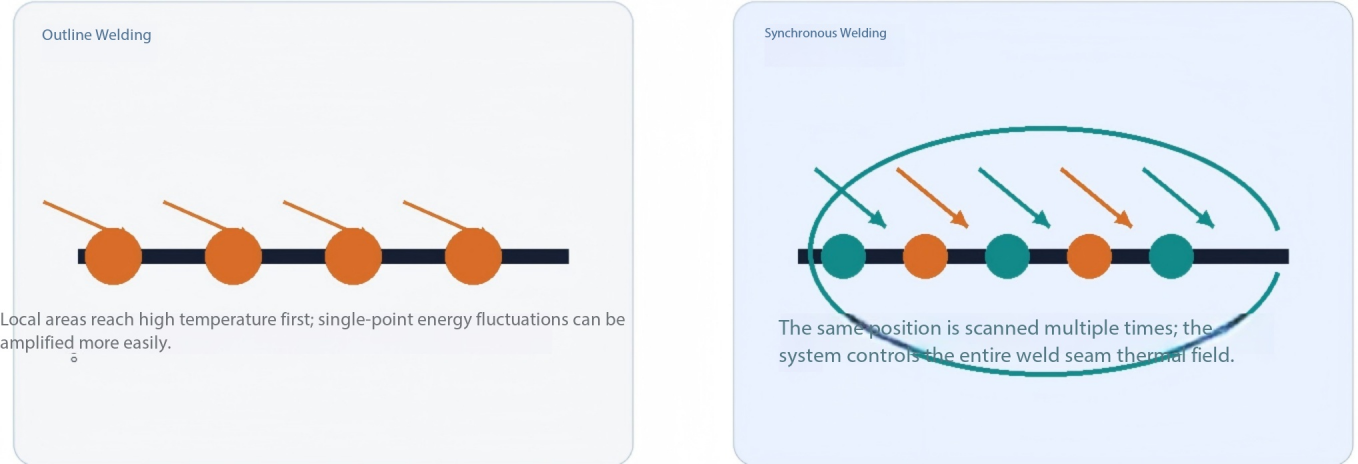
Figure 1: Quasi-synchronous welding generates a unified thermal field through multiple scanning cycles; the temperature-controlled component should be understood as the weld thermal system.
II. Why glass fiber reinforced materials are more prone to localized burns
When engineering plastics such as PA+GF30 and PBT+GF30 are reinforced with glass fibers, their mechanical strength and dimensional stability are significantly enhanced; however, the material's optical absorption and thermal diffusion behaviors become more complex. Exposed glass fibers during injection molding, localized crystallinity variations, minor impurities, dust contamination, or handling contaminants may all serve as potential sources of localized thermal anomalies.
These anomalies are typically very small, often approaching the resolution limits of conventional detection systems. At the onset of welding, they may manifest merely as negligible absorption differences; as temperature rises, local absorption rates continue to vary, leading to progressive heat accumulation and ultimately thermal runaway. The observed phenomena—welding sparks, localized bright spots, surface yellowing, or carbonization burns—are essentially the result of this amplification process.
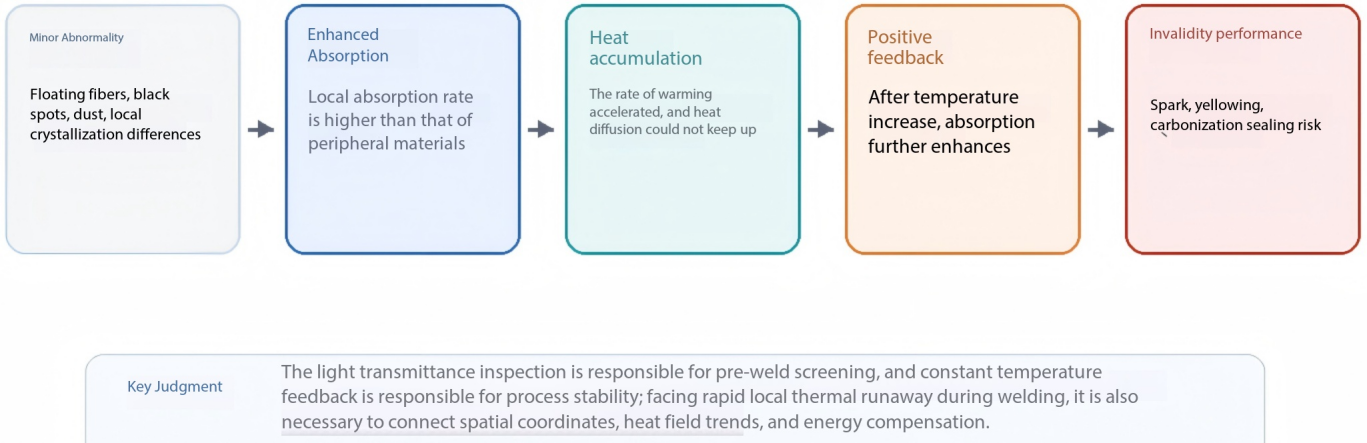
Figure 2: Microscopic materials or surface defects may be amplified during welding heat accumulation, leading to localized thermal runaway.
III. The Value and Limitations of Traditional Solutions
Previously, the industry typically employed light-transmittance-based full weld inspection, material screening, injection molding quality control, and conventional constant-temperature feedback systems to mitigate risks. These methods are crucial and indeed significantly improve overall yield rates; however, each has distinct limitations.
The comprehensive transmittance inspection is particularly adept at identifying obvious transmittance anomalies, large-sized impurities, and severe fiber floating present prior to welding; whereas the traditional constant-temperature feedback system excels in stabilizing overall thermal input, preventing temperature drift caused by equipment fluctuations, path variations, or heat dissipation differences.
The issue lies in the fact that certain abnormalities may not become fully apparent before welding or may only intensify rapidly during the welding process due to temperature rise. If the system can only address these abnormalities after they have already occurred, it becomes difficult to completely prevent localized burn damage.
· Pre-weld inspection addresses initial screening issues but cannot replace in-process control during welding.
· Traditional constant-temperature feedback addresses the stability of the overall thermal field and cannot be equated with point-by-point anomaly prediction.
· For high-GF materials and highly reliable seals, it is essential to establish a closed-loop system that integrates pre-welding, during-welding, and post-welding data.
IV. Key Upgrades of the New Generation Constant Temperature Quasi-Synchronous System
The key upgrade of Weikerui's new-generation constant-temperature quasi-synchronous system lies not merely in increasing temperature measurement speed or adding a single alarm threshold, but in integrating the weld's spatial position with the real-time temperature field to establish a digital model of the weld's thermal field that is locatable, traceable, and predictable.
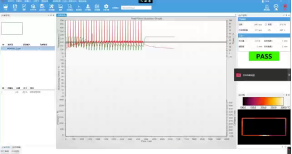
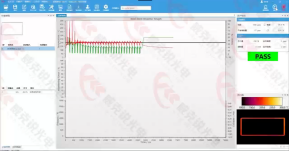 In this system, the position points along the weld path are no longer merely motion trajectories but spatial coordinates correlated with temperature variations, heat diffusion conditions, and process history data. The system continuously monitors the formation of localized hot spots, temperature zone shifts, abnormal heating rates, and heat diffusion anomalies, and applies energy corrections before these trends escalate into failures.
Figure 3 shows the differences after updating parts with the same defect (the high-resolution weld thermal imaging image is shown in the lower right corner).
Figure 1: The system intelligently detects defect anomalies, but cannot provide precise feedback during high-speed scanning.
Figure 2: Precise positioning and intelligent learning enable constant temperature feedback before extensive burns develop.
V. From "Identifying Abnormalities" to "Early Intervention"
Traditional control logic primarily employs feedback control: the system detects deviations in temperature from the target value and subsequently adjusts power output or scanning parameters. This approach is highly effective for overall temperature drift; however, for rapidly developing localized thermal runaway, abnormalities are often detected only when the system has already approached the burn-in threshold.
The objective of predictive control is to take proactive measures: by analyzing temperature change rates, thermal field distribution trends, material thermal behavior models, and historical process data, it identifies early signs of thermal runaway and reduces local energy input or adjusts energy distribution before actual localized burn damage occurs.
dimension | Traditional constant temperature, quasi-synchronous control | New generation of constant-temperature, quasi-synchronous systems |
control object | Overall weld temperature and thermal balance | Local heat field trend after welding seam coordinates have been bound |
data sources | Temperature value, power curve, welding time | Thermal imaging, spatial coordinates, historical process database, material models |
response mode | After identifying the deviation, adjust the overall energy input. | Perform local energy correction in advance after identifying abnormal trends. |
Main Value | Enhance overall consistency and expand the range of fundamental processes. | Reduce the risk of local thermal runaway and enhance adaptability to complex materials |
VI. The Significance of AI and Process Databases
As operational data from the equipment continues to accumulate, the system can progressively establish a multidimensional process database. The database records not only the temperature curve of a single welding cycle but also includes material batch information, transmittance characteristics, weld structure, power variations, thermal field distribution, anomaly locations, and final quality outcomes.
When combined with AI algorithms, the system's decision-making capability evolves from "what is the current temperature?" to "is this temperature rise trend hazardous? Could there be local anomalies at this location? Should early compensation be applied in the next scan?" This marks the pivotal shift for laser plastic welding from experience-based parameter tuning to data-driven process control.
VII. The actual value customers receive
For customers, the value of the new-generation constant-temperature quasi-synchronous system extends beyond merely adding a functional module; it significantly enhances the controllability, stability, and traceability of the entire welding process. Particularly when dealing with glass fiber reinforced materials, complex weld structures, or stringent sealing requirements, predictive control enables the process window to evolve from "barely usable" to "stable mass production."
· Reduce visual and reliability risks such as localized burns, yellowing, and carbonization.
· Expand the process window for quasi-synchronous welding to minimize the impact of batch variations on production.
· Reduce reliance on empirical parameter tuning and enhance stability during model conversion, system integration, and mass production.
· Digitizing the welding process provides a foundation for subsequent quality traceability and process optimization.
· Reduce costs associated with rework, product scrapping, and line shutdown inspections, thereby enhancing overall manufacturing efficiency.
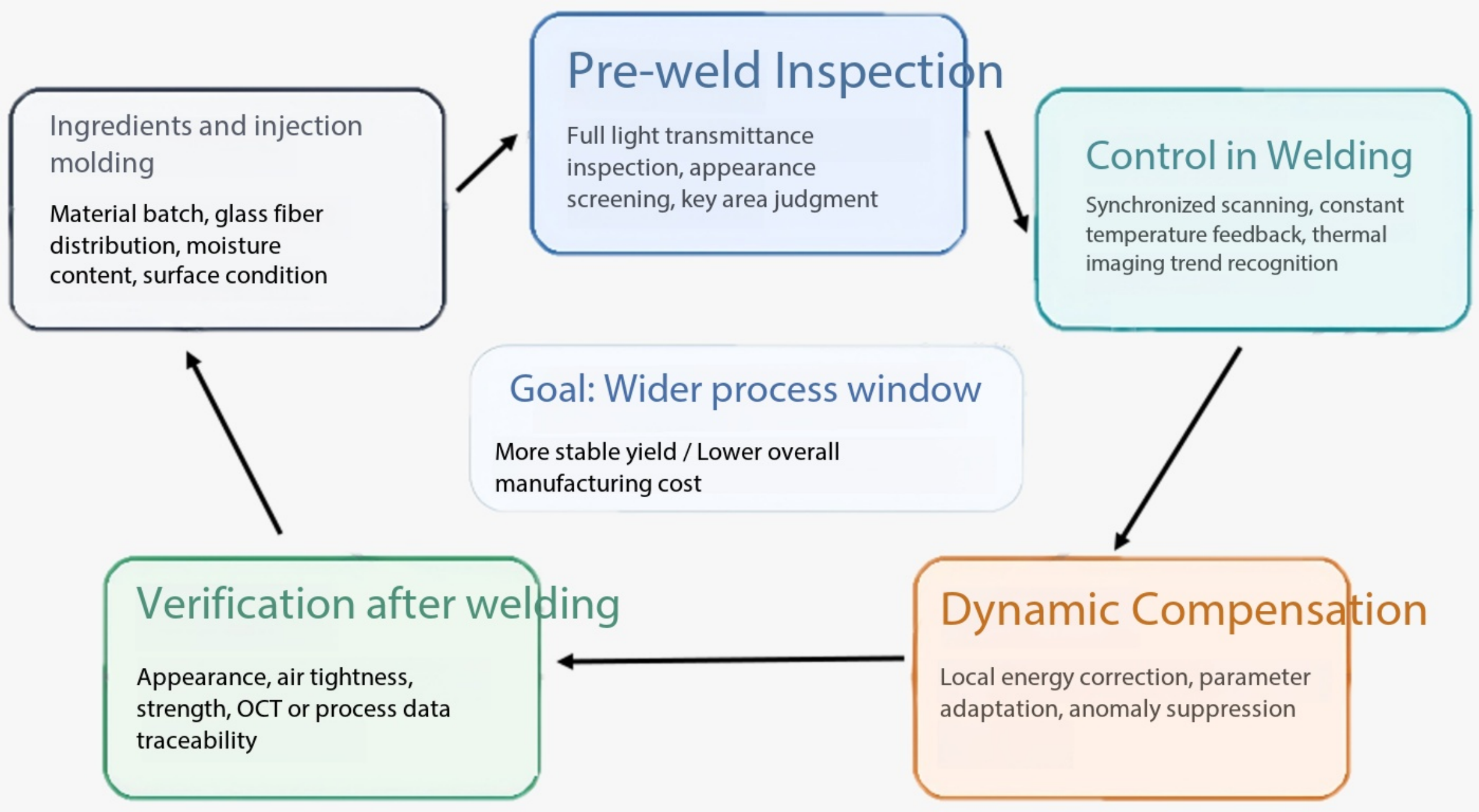
Figure 4: High-reliability quasi-synchronous welding requires a quality closed-loop system comprising materials, inspection, process control, and post-weld verification.
VIII. Conclusion: Quasi-synchronous welding has entered the stage of intelligent thermal field control
Laser plastic welding is transitioning from the era of traditional equipment control to an era of intelligent thermal field control. The competitive focus of quasi-synchronous welding has shifted from merely "whether welding can be completed" to "whether high-quality welding can be achieved consistently over long periods under complex material conditions and real-world production variations."
The launch of Weier's new-generation constant-temperature quasi-synchronous system marks a significant advancement in temperature control technology, shifting from overall thermal balance management to precise weld heat-field prediction. As infrared thermal imaging, high-speed data acquisition, AI-driven process learning, and dynamic compensation capabilities continue to mature, quasi-synchronous laser plastic welding will offer broader process flexibility, reduced setup complexity, and enhanced consistency in mass production.
For high-end manufacturing, this is not merely a simple update to temperature control functionality, but a comprehensive upgrade in welding quality control philosophy.
 Home
Home Products
 Telephone
 Message


