



Introduction: The "Lifeline" of Automotive Electronics
Vehicle actuators (such as EPBs, EMBs, door lock actuators) along with the ECU (Electronic Control Unit) and water valves in the heat exchange module serve as the vehicle's "brain" and "extremities," whose reliability directly impacts performance and safety. The plastic housings of these modules—typically made from reinforced nylon PA66-GF30 or PBT-GF30—protection crucially safeguard internal precision circuits from moisture, chemicals, dust, and vibration. Laser welding, as the predominant sealing technique, is pivotal to module integrity; any welding defect can lead to catastrophic consequences. This article systematically analyzes common defects in this process, their root causes, and solutions for achieving zero defects.
I. Defect Profile: Phenomena, Causes, and Impacts
Defect Category | Specific Manifestations and Impacts | In-depth Analysis of the Root Causes | Systemic Solution |
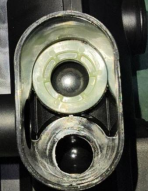
Sealing failure | 1. Insufficient welding/underwelding: The welding interface is not fully fused, resulting in nanoscale leakage pathways. While | • Insufficient energy: The laser power is too low or the welding speed is too high. • Poor interface contact: poor flatness of the housing, insufficient clamping force, or presence of micro-particles. • Material issues: The upper layer exhibits substandard or uneven light transmittance (e.g., glass fiber aggregation), while the lower layer has insufficient light absorption. | • Material inspection: Conduct comprehensive 100% testing of light transmittance and absorbance for both upper and lower shells to reject defective items. • Process Monitoring: Features real-time energy/temperature monitoring to ensure stable energy input. • Fixture optimization: Ensures uniform clamping force and allows for a specified "塌陷 distance" to compensate for part tolerances. |
2. Porosities and bubbles: Microscopic voids exist within the weld seam, serving as direct pathways for leakage.
| • Material moisture content: The PA/PBT material is not sufficiently dried, causing water to vaporize during welding. • Material decomposition: Overheating causes materials or additives (e.g., flame retardants) to decompose and release gases. • Contaminants: Oil stains on the welding surface, which vaporize to form bubbles. | • Forced drying: Establish stringent specifications for raw material drying and moisture-proof storage to ensure a moisture content below 0.02%. • Thorough cleaning: Clean the welding area completely with solvents such as isopropanol before welding. | |
Insufficient strength (low blasting efficiency) | 1. Insufficient weld strength: fails vibration, drop, or internal pressure tests (the diagram shows | • Insufficient welding penetration: The effective welding area is inadequate. • Overburning/degradation: Excessive heat input causes material carbonization and makes the weld brittle. • Internal stress: The combination of welding thermal stress and injection molding internal stress. | • Parameter optimization: Identifies the optimal power-speed combination through DoE experiments and expands the process window. • Annealing treatment: Perform annealing on the parts before welding to eliminate internal stresses. • Metallographic analysis: Regularly section the samples to examine melting depth, melting width, and internal defects. |
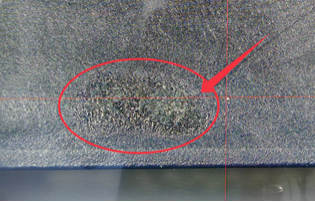
bad order | 1. Surface burn/carbonization: Black spots, yellow discoloration, or pits appear | • Excessive energy: Too high laser power or too slow welding speed. • Surface contamination: The local absorption rate of oil stains and glass fiber fluff fibers increases significantly. • Laser dwell time: At path corners or endpoints, laser pauses cause heat accumulation. | • Parameter optimization: Specifically, implement power attenuation at path corners. • Strict cleaning: Clean the welding area before welding. • Isothermal feedback control: Dynamically adjusts power output to prevent localized overheating. |
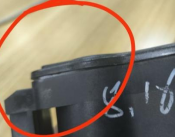
2. Edge飛濺/soldering splatter: Melted material is ejected from the weld seam, | • The clearance design is unreasonable/insufficient clamping force. • Excessive energy causes the material to melt excessively. | • Optimize clamping force and welding path design. • Precise control of linear energy density. | |
Latent, long-term reliability risks | 1. Material hydrolytic aging (particularly pronounced in PA66): Under the high-temperature and high-humidity conditions of the engine compartment, nylon molecular chains break, leading to gradual deterioration in joint strength over time. | • Determined by the inherent properties of the material itself. • The welding heat process may accelerate localized aging. | • Material selection: Use nylon with high hydrolysis resistance (e.g., with added hydrolysis stabilizers). • Protective design: Incorporates a waterproof breathable membrane (waterproof breathing) to balance internal and external pressure. |


II. Core Challenges in Batch Production: Stability Fluctuations and Systematic Quality Control
To achieve anti-aging properties, ECU housings are typically fully black, presenting significant challenges for "black-box" welding processes.
· Defects are invisible: All internal defects (virtual welds, pores) cannot be detected by the naked eye after welding.
· Narrow process window: Black materials exhibit high laser absorption rates, leading to concentrated heat accumulation at the surface layer and impaired heat transfer to the interface, thereby imposing extremely stringent requirements for parameter stability.
In mass production, the challenge we face is not quality issues of individual components but rather the stability of process capability. Phenomena such as yield fluctuations and dispersed burst strength data fundamentally stem from numerous specific causal variables within the production system that compromise process robustness.
1 Root Cause Analysis of Variability: The "Invisible Killer" in Mass Production
1. Minor differences between material batches
o Root cause: Different batches of nylon/PBT raw materials exhibit minor variations in molecular weight distribution during polymerization, as well as in the content and dispersibility of additives (glass fibers, flame retardants, colorants). These differences directly result in fluctuations in transmittance, absorbance, and melt flow properties.
o Impact: A fixed laser power cannot accommodate the inherent fluctuations of materials, resulting in fluctuating energy input at the welding surface and leading to inconsistent material fusion quality, manifested as discrete explosion strength values.
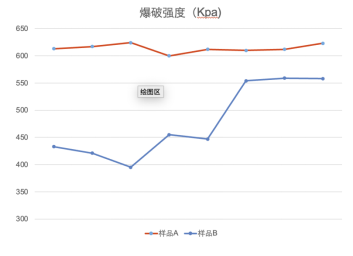
The figure shows the ultimate blast strength of the same product under two different process parameter controls. It is evident that although Sample B also achieves a blast strength exceeding 0.4 MPa, its ultimate blast strength values exhibit significant variability.
Sample A: Laser temperature-controlled closed-loop system with collapse amount feedback
Sample B: Fixed laser power + collapse amount feedback
2. Fluctuation propagation in injection molding processes
o Root cause: Injection molding is a preceding process to welding. Wear of injection molding machines, changes in mold condition, and fluctuations in ambient temperature and humidity can lead to issues such as uneven internal stress distribution, slight variations in flatness, and differences in glass fiber orientation within the welded shell.
o Impact: These injection molding fluctuations directly alter the contact condition and energy transfer efficiency of the weld surface, serving as the primary influencing factor for welding yield variability.
3. The long-term stability of the laser device itself
o Root causes: The laser output power exhibits slight drift depending on operating time and temperature; the accuracy of the scanning galvanometer is affected; and the repeatability of fixture positioning decreases due to wear.
o Impact: This indicates that the "optimal parameters" determined during initial debugging may have deviated from the ideal range after eight hours of production, leading to a gradual decline in yield over time.
4. Environmental and human factors
o Root causes include: daily fluctuations in ambient temperature, equipment cooling during shutdowns during holidays, and inconsistency in the clamping force applied by operators.
o Impact: These factors introduce unforeseen disturbances, particularly during shift changes or system restarts, which can readily lead to sudden yield declines.
2. The direct consequences of volatility
· The yield rate cannot remain consistently high: it fluctuates between 100% and suddenly drops below 90%, making production planning challenging and resulting in substantial scrap costs.
· Quality issues coexist with both excess and deficiency: To ensure minimum safety standards, overly conservative process parameters are often set, resulting in some products exhibiting "excessive quality" (e.g., excessive melt depth or high internal stress), while others hover perilously on the brink of "insufficient quality" (critical melt depth).
· Latent failure risks for clients: Even after passing 100% air-tightness tests, products in the "substandard quality" borderline state exhibit significantly reduced long-term reliability (e.g., vibration fatigue resistance and thermal shock resistance), leading to higher field failure rates.
III. Building Sustainable Batch Production Capabilities: From Emergency Response to Preventive Measures
To address fluctuations, one cannot rely on reactive parameter adjustments; instead, a preventive and self-adaptive production system must be established.
1. Mandatory implementation of process monitoring: Building a "adaptive brain" for manufacturing processes
This is the core strategy for managing all fluctuations. The following must be implemented:
· Constant temperature feedback control: This is the ultimate solution for addressing material batch variations. It continuously monitors changes in material properties and dynamically adjusts laser power, actively expanding the process window by several times, thereby rendering the process insensitive to upstream fluctuations.
· Collapsation monitoring: This provides direct evidence of consistent physical conditions at the welding interface. By monitoring and controlling the collapse amount, the uniformity of fusion depth can be precisely maintained, ensuring stable blast performance.
· Most importantly, the aforementioned monitoring should involve real-time curve detection to ensure continuous feedback at every stage of the welding process, rather than providing only a fixed value upon completion. Only by fully quantifying data throughout the welding process can we effectively mitigate low-probability defects in mass production.
2. Implement Statistical Process Control (SPC) – Data-driven decision-making
SPC is not merely about recording results; it involves real-time monitoring and analysis of process parameters.
· Monitor key process parameters in real time: instead of testing gas tightness only after welding is complete, continuously monitor the laser power adjustment curve, actual temperature curve, and collapse amount curve.
· Set control limits: Use the mean (X-bar) and range (R) of these process data to create a control chart.
· predictive intervention: When a data point exhibits an abnormal trend (e.g., seven consecutive upward trends or approaching control limits) before the product is deemed defective, the system triggers an alarm. This enables equipment maintenance or process adjustments prior to batch-level issues occurring, facilitating predictive maintenance.
3. Establish comprehensive data traceability and closed-loop feedback throughout the entire process
· Data integration: Assign a unique code to each product and link it with the material batch number, injection molding machine ID, welding process data (temperature curve, collapse amount), and final test results (blast strength).
· Closed-loop feedback: When a batch of products shows consistently low explosion resistance, immediately trace back the welding process data and further identify the responsible injection molding machine and material batch. This enables precise, rapid root cause analysis and provides actionable recommendations for improvement in upstream processes.
4. Strengthen upstream control and standardization
· Strict material inspection standards: Jointly establish stricter material acceptance criteria with suppliers, particularly regarding the control of light transmittance ranges.
· Standardization of injection molding processes: stabilize the injection molding process and reduce variations transmitted downstream.
Solution: A Paradigm Shift in Process Monitoring
The approach must shift from "post-event monitoring" to "in-process prevention," with the core being the deployment of advanced process monitoring technologies.
1. Constant temperature feedback control: Infrared sensors monitor weld temperature in real time and dynamically adjust laser power. When material fluctuations or contamination occur, the system automatically compensates to prevent overburning or poor welding, significantly enhancing process robustness.
2. Collapsement monitoring: High-precision displacement sensors are integrated into the fixture to continuously monitor the distance of material collapse caused by melting during welding. Melting depth exhibits strong correlations with both collapse magnitude and the material temperature range. A stable, expected collapse curve serves as the most compelling indirect evidence of proper interfacial fusion.
3. Real-time energy monitoring: It tracks the real-time output curve of laser power, where abnormal fluctuations are strongly correlated with welding defects.
4. Pressure process curve: During welding, as the material transitions from the glassy state to the viscous-flow state and back to the glassy state, the pressure curve undergoes phased adjustments in accordance with the temperature curve and the collapse amount curve, forming a complete process loop. This curve also clearly demonstrates the plasticization process of plastics during mass production.
IV. Towards Zero Defects: A Multi-layer Quality Assurance System
For automotive electronics, a single detection method is insufficient to ensure reliability; a multi-layered defense system must be implemented.
Control Level | method | purpose |
First Layer: Raw Materials and Prevention | Material dryness test, comprehensive light transmittance measurement, and housing flatness inspection | Eliminate potential risks such as moisture and material inconsistencies at the source. |
Second Layer: Process Monitoring (Core) | Constant temperature feedback, settlement monitoring, real-time energy monitoring, and pressure detection. (All of the above must provide detailed process data rather than merely result-based feedback.) | In-process prevention involves intervention and alerting before defects occur. |
Third Layer: 100% Online Detection | Air tightness test (pressure drop method/helium mass spectrometry) | The final validation of functionality is the minimum requirement for shipment. |
Fourth Layer: Regular Destructive Validation | Metallographic analysis, tensile/shear strength testing, burst pressure testing | Test process limits and calibrate non-destructive testing methods for continuous improvement. |
Layer 5: Long-term Reliability Verification | High-temperature and high-humidity testing, temperature cycling testing, vibration testing | Simulate the entire lifecycle to verify design margins. |
Conclusion
The laser welding quality between vehicle actuators and ECU housings constitutes a systematic engineering challenge spanning materials science, injection molding processes, laser physics, automated control, and data traceability. Only by thoroughly understanding the root causes of defects and establishing a comprehensive quality assurance system that integrates "prevention at source (materials/design), in-process control (temperature feedback), and post-processing verification (non-destructive testing + destructive testing)" can reliable production with near-zero defects be fundamentally achieved. Among these approaches, adopting data-driven intelligent welding centered on process monitoring is the essential solution for addressing the challenges posed by fully black housings and meeting the automotive industry's stringent demands for safety and quality.
 Home
Home Products
 Telephone
 Message


