



In modern precision manufacturing, particularly in sectors such as automotive electronics, medical devices, and consumer electronics, plastic laser welding technology is widely favored due to its contactless operation, absence of weld particles, high precision, and aesthetically pleasing weld surfaces. However, the successful application of this technology hinges critically on a seemingly simple yet essential prerequisite: consistent light transmittance across plastic components to be welded. This article examines the urgency of implementing full-weld light transmittance inspection, analyzes how fiber aggregation—a typical material issue—significantly impacts welding yield, and systematically identifies the key factors influencing welding quality.
I. Non-negotiable: The Importance of Full-Weld Transmittance Inspection
The principle of plastic laser welding is as follows: A beam of laser light with a specific wavelength penetrates the upper layer of transparent plastic, reaches the surface of the lower layer of light-absorbing plastic, where it is absorbed and converted into thermal energy. The heat melts the contact surface between the upper and lower layers of plastic through thermal conduction, enabling molecular chain fusion and welding under pressure.
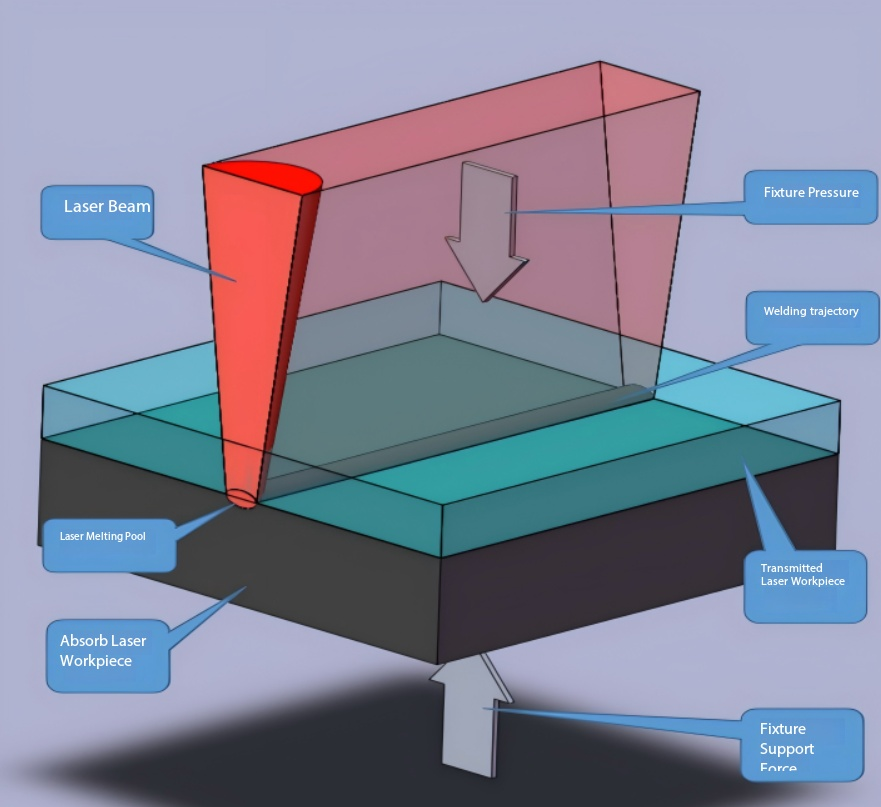
During this process, the light transmittance of the upper plastic component serves as the critical determinant for laser energy delivery. Any localized or minor fluctuations in light transmittance can lead to significant differences in welding outcomes.
Why must it be a "comprehensive inspection" rather than a "random inspection"?
1. The concealment and locality of defects: Defects such as internal impurities, glass fiber clusters, microbubbles, stress whitening, or surface micro-scratches are typically localized. Traditional sampling inspection methods are akin to finding a needle in a haystack, unable to ensure that all critical welding areas of each manufactured part are flawless. A single undetected minor defect can lead to a poor weld joint or penetration defect during welding, resulting in compromised sealing performance or insufficient structural strength of the entire component.
2. The essential requirement for achieving a 100% welding yield: In high-end manufacturing aimed at zero defects, the welding yield must approach 100%. Only by conducting 100% light-transmittance scanning (i.e., full weld inspection) along the entire predetermined weld path for each workpiece can potentially problematic materials be identified and eliminated before the welding process. This represents a shift in quality control from "post-event remediation" to "preventive measures," fundamentally preventing batch-wide welding failures caused by material issues.
3. The foundation of process stability: The parameters of laser welding equipment (such as power and speed) are defined based on standard transmittance materials. If the workpiece's transmittance varies, operators may face difficulties—increasing power may cause overburning in normal areas, while reducing power may result in insufficient welding in defective areas. Comprehensive inspection and grouping management provide data support for precise subsequent parameter adjustments, ensuring production process stability and repeatability.
4. With advancements in manufacturing technology, the light transmittance of plastic materials has become highly stable, and defects caused by particle content have virtually disappeared. The primary issues now arise during the injection molding stage.
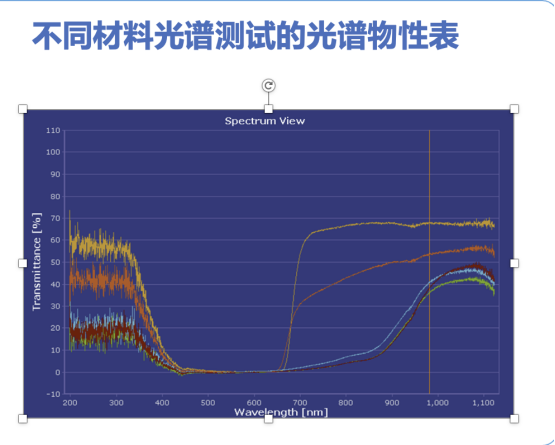
Full weld inspection involves more than just examining a few points on the workpiece; it employs scanning measurements to comprehensively cover the entire weld path, generating a "transmittance cloud map" that visually demonstrates whether energy distribution across the entire weld area is uniform.
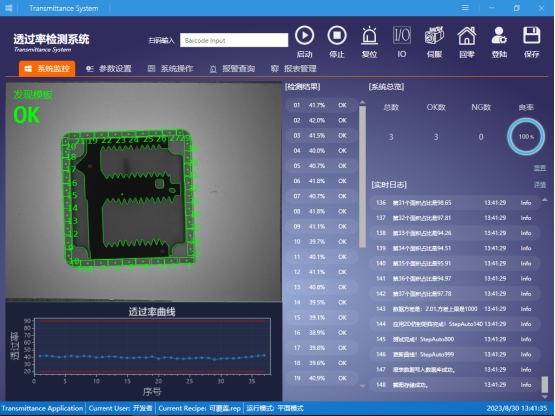
II. The Hidden Killer: The Fatal Impact of Glass Fiber Aggregation on Welding Yield
During the injection molding of reinforced plastics (e.g., PA6+GF30, PBT+GF30), uniform distribution of glass fibers represents a common process challenge. Glass fiber agglomeration refers to the phenomenon where glass fibers become entangled or aggregated in localized regions of the material rather than being uniformly dispersed.
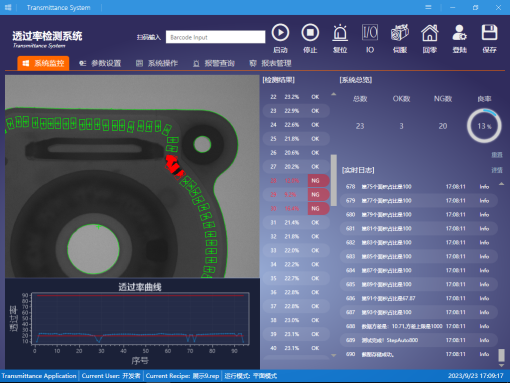
This phenomenon has a catastrophic impact on laser welding quality:
1. Formation of localized "light-blocking points": Glass fibers exhibit strong scattering and reflection effects on lasers. When glass fibers are clustered, a highly scattered region is formed at the aggregation sites, significantly obstructing laser beam propagation. This effectively creates multiple "obstacles" along the laser transmission path.
2. This results in extremely uneven energy distribution: when the laser reaches the focal point, the majority of energy is scattered or reflected, preventing effective transmission to the underlying light-absorbing components. The direct consequence is:
o Insufficient welding or poor fusion: The welding interface beneath the concentration area fails to melt completely due to inadequate energy, creating structural weaknesses and potential leakage pathways.
o Stress concentration: The area around a poor solder joint becomes a stress concentration zone, where cracks are prone to propagate during vibration or impact.
3. Surface overheating or even carbonization: Laser energy scattered by glass fiber clusters may be absorbed within the upper plastic layer or on its surface, causing a sharp rise in local temperature that leads to material degradation, yellowing, and even carbonization, severely compromising product appearance and performance.
Therefore, the essence of controlling glass fiber agglomeration lies in ensuring uniformity of light transmittance. Through comprehensive light transmittance testing, high-risk workpieces containing glass fiber agglomerations can be efficiently and non-destructively identified, and returned to the material supplier or subsequent injection molding processes for root cause analysis, thereby driving quality improvement throughout the entire supply chain.
Main causes of unstable light transmittance
1. Material Batch Difference:
o Differences in base resins: Raw materials of nylon (e.g., PA6, PA66) from different batches may exhibit minor variations in molecular chain structure and crystallinity, which directly affect their absorption and scattering characteristics under near-infrared laser irradiation.
o Additive Variation: Nylon typically requires the addition of glass fibers, toughening agents, flame retardants, heat stabilizers, and other additives to meet performance requirements. The type, proportion, and uniformity of distribution of these additives across batches are the primary factors influencing light transmittance. Particularly regarding the content and distribution of glass fibers, even minor agglomerations can create localized "light-blocking spots."
2. Injection molding process variation:
o Moisture content: Nylon exhibits strong hygroscopic properties. Incomplete drying of the granules or reabsorption of moisture during injection molding can lead to the formation of microbubbles ("silver streaks") within the product. These microbubbles strongly scatter laser light, resulting in reduced and uneven light transmittance.
o Processing temperature and speed: Instability in parameters such as injection temperature, holding pressure, and injection velocity can affect the orientation and distribution of glass fibers, potentially leading to material degradation or the generation of internal stress (stress whitening), all of which may cause localized changes in light transmittance.
Mold conditions: Uneven mold temperature, poor exhaust flow, or cold material marks can all cause localized defects in the product, compromising light transmittance consistency.
III. Systems Perspective: Core Factors Influencing the Quality of Plastic Laser Welding
Beyond light transmittance and material uniformity, welding quality constitutes a systematic process primarily influenced by the following key factors:
· 1. Material Factors
o Optical transmittance/absorbance matching: The transmittance and absorbance of the upper and lower plastic layers for laser wavelengths must be precisely matched. This is fundamental to process feasibility.
o Material consistency: Materials from different batches must exhibit stable color, additive content (e.g., glass fibers, mineral fillers), and distribution.
o Compatibility and melt index: The upper and lower layers of plastic must exhibit good compatibility, with their melt indices (fluidity) being closely similar to ensure adequate molecular diffusion and entanglement at the fusion interface.
· 2. Design/Process Factors
o Device accuracy and stability: The power stability of the laser, the precision of the scanning galvanometer, and the positioning and clamping force control of the fixture constitute the hardware foundation for ensuring consistency.
o Welding parameters: laser power, weld point temperature, welding speed, and linear energy (power/speed) determine the amount of heat input. Parameters that are too low result in poor weld integrity; those that are too high cause degradation or deformation.
o Weld design: The width and shape of the weld (e.g., contour welding, quasi-synchronous welding, mask welding, etc.) must match the product structure and material properties.
· 3. Control Factors
o Material Inspection: Implementing rigorous transmittance testing across all weld seams serves as the first and most critical line of defense against defective products.
o Process Control: Maintain cleanliness of the welding area (free from dust and oil stains), monitor ambient temperature and humidity, and regularly calibrate equipment parameters.
o Quality traceability: Establish a comprehensive data tracing system covering the entire process—from material batches to finished components and welding parameters—to enable rapid identification of root causes when issues arise.
The following analysis examines the value of comprehensive transmittance testing from two common classifications in the automotive industry.
1: Sealing of plastic housings for automotive electronic components
In the manufacturing process of automotive electronic components, the sealing welding of plastic enclosures often represents the final step and serves as the ultimate test determining the product's final quality, reliability, and safety. A control unit destined for installation in the engine compartment or a sensor mounted near the chassis houses precision PCB boards and chips that require lifelong reliable protection within their plastic housing from exposure to moisture, chemicals, dust, and vibration.
Since welding is the final step, the value of all preceding processes (such as injection molding, PCB assembly, and assembly) is fully realized at this stage. If welding defects arise due to poor local light transmittance in upper plastic components, the consequences extend beyond mere yield losses to a dual disaster involving both cost escalation and safety risks.
I. The final trap: exponential amplification of defect costs
Automotive electronic components exhibit exceptionally high value density. Upon entering the welding station, a housing may already contain expensive electronic components and have passed all functional tests. The cost structure at this stage is as follows:
· Sunk costs: material cost + injection molding cost + electronic component cost + PCBA manufacturing cost + assembly cost.
· Additional waiting cost: The processing cost inherent to the welding procedure itself.
When welding fails due to inherent light transmittance issues in the upper shell (e.g., fiber aggregation), the consequence extends beyond the disposal of a single plastic component to the complete failure of the entire assembly. Such waste is devastating.
1. Significant direct disposal costs: The loss involves a complete, high-value subsystem assembly.
2. Production line shutdown risks and capacity losses: If defects are not detected promptly, leading to widespread welding failures, the entire production line may have to be halted for troubleshooting and cleanup, resulting in significant losses of production capacity and labor hours.
3. The cost of rework is extremely high or even unfeasible: once plastic laser welding is completed, the process is virtually irreversible. Forced disassembly and rework may not only damage the housing but also cause irreversible physical or thermal damage to internal precision electronic components, posing significantly higher risks than direct disposal.
Therefore, before performing the critical "final weld step," conducting a comprehensive light transmittance inspection of the upper shell is no longer merely a quality control measure but has become a highly cost-effective tool for cost control. Preventing the rejection of a defective plastic component valued at only a few yuan avoids the waste of an assembly worth hundreds or even thousands of yuan.
II. Seal Failure: A Qualitative Shift from Quality Defects to Safety Hazards
In automotive electronics, sealing performance is not merely a standard quality metric but a critical safety requirement that must never be compromised.
Local poor welds or pinholes caused by fiber aggregation can create microscopic channels in the weld seam that are invisible to the naked eye. While components may pass factory air-tightness tests in the short term, these weak points gradually become sources of failure under harsh conditions during a vehicle's long service life—such as continuous vibration, thermal cycling, and high-pressure water washing.
· Water ingress: Can cause short circuits and corrosion in internal circuits, leading to functional failures, false alarms, or permanent component damage. For engine control units or brake assist systems, such failures can be catastrophic.
· Chemical corrosion: The infiltration of brake fluid, engine oil, or similar substances can corrode weld joints and precision components.
· The concealed and delayed nature of sealing failures: The issue may not manifest on end-user vehicles for months or even years, leading to:
o High costs associated with warranty claims.
o The potential risk of a mass recall could deal a devastating blow to the brand's reputation.
o The security responsibilities are difficult to clarify.
Therefore, comprehensive light transmittance testing in this context essentially serves as a safety assurance measure. It ensures that every upper shell component fed into the welding process is made of material capable of forming a complete, uniform, and high-strength weld seam, thereby eliminating the "time bomb" posed by material inconsistencies at its root cause.
2. Unstable light transmittance of nylon pipeline joints: an overlooked source of leakage risk
How does unstable light transmittance specifically contribute to leakage risks?
The leakage risk does not stem directly from the transmittance value itself, but rather from the uneven distribution of welding energy density caused by its non-uniformity.
1. Energy deficiency zone → Poor weld/will not penetrate:
o In regions with low light transmittance, laser energy is excessively attenuated or scattered, preventing it from reaching the welding interface or failing to provide sufficient energy for complete melting of the nylon material.
o Consequences: The region fails to form effective molecular chain entanglements, resulting in minor non-welded defects at the weld interface. During initial pressure tests, these defects may go undetected; however, under prolonged vehicle vibration, oil pressure pulsations, and thermal cycling stresses, they gradually evolve into through-cracks that cause leakage of the medium (fuel or coolant).
2. High-energy region → Overburning/degradation:
o In regions with high light transmittance, excess laser energy passes through unimpeded and concentrates in the underlying absorption layer, causing a sharp rise in interface temperature that exceeds the material's tolerance limit.
o Consequences: Nylon material undergoes thermal degradation, carbonization, and bubble formation. Overburning renders the weld material brittle, creating structural weaknesses. Additionally, generated bubbles and carbonized impurities compromise the continuity of the weld, thereby forming leakage pathways.
3. Uneven weld strength and sealing performance:
o A weld seam that should be uniform and consistent exhibits inconsistencies in melting depth, width, and material properties across different sections due to uneven energy distribution. Such non-uniform welds significantly compromise overall strength and tend to fail at the weakest point first.
o The catastrophic consequences of leakage risks
Find some pictures showing burn marks and poor welding connections.
For automotive piping systems, a leak means:
· Safety hazard: Fuel leakage poses an extremely severe fire risk; leakage of power steering fluid or brake fluid directly results in loss of vehicle control.
· Performance failure: Coolant leakage causes engine overheating and cylinder scoring; intake system leakage leads to abnormal engine operation and excessive emissions.
· High after-sales costs: In the event of an off-site failure, companies face batch recalls, warranty claims, and damage to brand reputation—costs far exceeding manufacturing expenses.
Conclusion
Under the stringent requirements of plastic laser welding, conducting full weld inspection of the light transmittance of upper workpieces is no longer optional but a necessary investment to ensure high yield and reliability. With the advancement and widespread adoption of industry technologies, the light transmittance stability of materials has become highly consistent. In large-scale production, this approach precisely addresses key material defects during injection molding—such as glass fiber agglomeration, oil contamination at weld locations, and structural damage—by shifting quality control focus forward and achieving a leap from reactive response to proactive prevention. Only through systematic refinement in materials, design, processes, and quality management can the full potential of plastic laser welding technology be realized, enabling the production of high-quality products that meet future market demands.
 Home
Home Products
 Telephone
 Message


