



In thermal management systems for new energy vehicles, critical components such as multi-way valves, distribution valves, and electronic pump housings extensively employ plastic laser welding technology. Among these, nylon water valves—due to their planar sealing weld structure, narrow weld rib dimensions (typically 1–1.5 mm), and requirement to withstand prolonged pressure and temperature cycling—pose exceptionally high demands on weld integrity and mechanical strength.
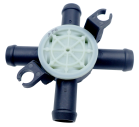
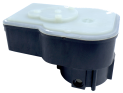
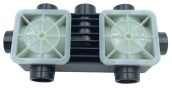
However, in actual mass production, enterprises have long faced a significant quality management challenge: traditional testing methods can only determine whether a product has leaks, but cannot assess the actual integrity of the welds. This results in some products being compliant initially, yet failing over time due to the gradual expansion of weak areas within the welds. Establishing a system capable of quantifying weld quality, predicting product performance, and enabling full-process traceability has become a key focus for the industry.
I. Blind Spots in Traditional Testing: Why Does "No Misses" Not Equal "Perfect Welding"?
The commonly employed quality assessment methods in the industry primarily include air tightness testing, water resistance testing, burst testing, tensile testing, and destructive cross-sectional analysis. While each method has its own merits, they share a fundamental limitation: they evaluate the final performance of the product rather than the internal formation quality of the welds.
Take air tightness testing as an example. While this test can determine whether a product is leaking, a weld may pass the inspection even if it contains localized non-welded areas—as long as no continuous leakage path has formed. However, in practical applications, temperature cycling, pressure fluctuations, vibration impacts, and prolonged fatigue continuously act on these vulnerable areas, ultimately leading to microcracks, crack propagation, and eventual product failure.
The absence of leakage does not necessarily indicate a reliable weld.
II. The Essence of Weld Quality: The Effective Bonding Area Determines Performance
From the perspective of the welding mechanism of polymer materials, laser plastic welding is not merely a simple process of material fusion. Its fundamental principle involves the application of laser energy at the welding interface, leading to localized melting of the material. This causes the polymer chains to acquire mobility, enabling mutual diffusion and reorganization of molecular chains between the upper and lower materials, ultimately forming a new bonded structure upon cooling.
The regions that ultimately confer mechanical strength and sealing performance to the product are those where molecular chain diffusion and re-winding have truly occurred. Therefore, the quality of a weld seam does not depend on whether a weld seam is formed at all, but rather on the proportion of its areas that achieve effective bonding. This constitutes the critical metric currently lacking in the industry—the effective bonding ratio of weld seams.
III. Effective Welding Rate (EWR): A quantifiable quality indicator for welds
Based on the aforementioned mechanism, we propose using the "Effective Weld Ratio" (EWR) as a quantitative metric for weld quality. It is defined as the proportion of the entire designed welding area where an effective bond is actually formed.
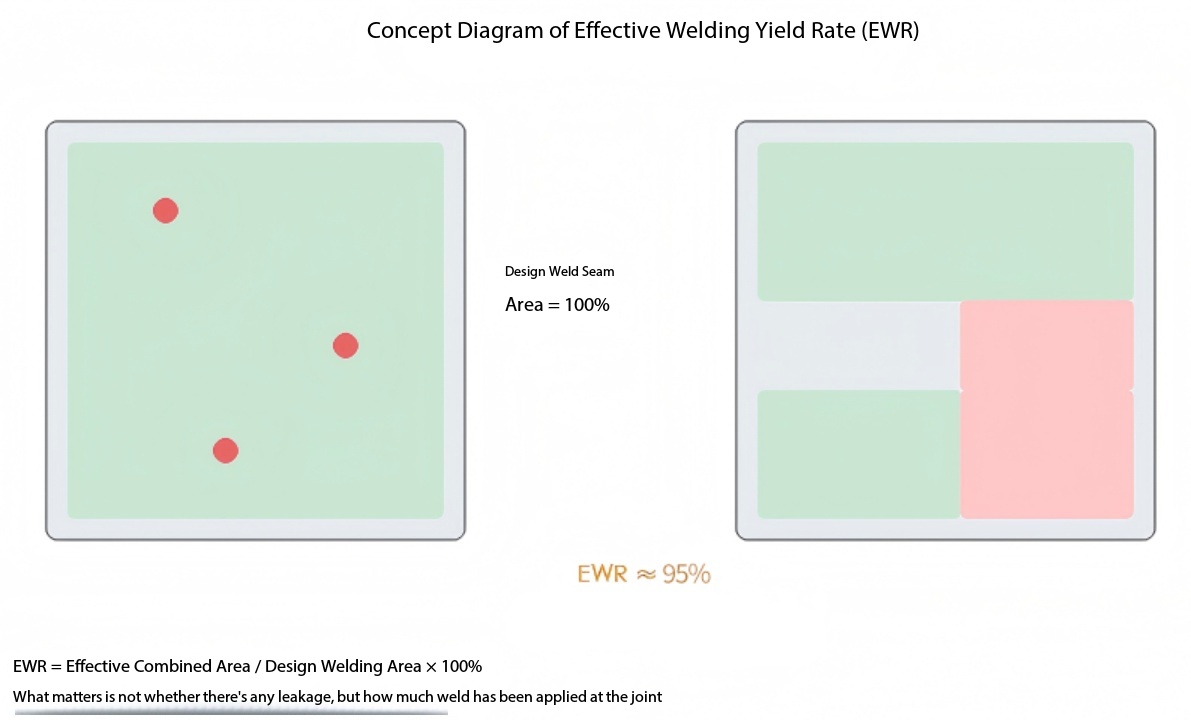
Figure 1 Conceptual diagram of Effective Welding Rate (EWR)
For example, assume a nylon water valve has a designed weld bead area of 100%. Inspection reveals that 95% of the area achieves proper bonding, while 5% shows inadequate bonding; thus, the product's EWR is 95%. This metric focuses not on "whether the product currently leaks," but on "how well the welds are actually formed."
To obtain EWR data, a technique is required that can non-destructively examine the internal structure of welds and perform quantitative analysis of the welding area. OCT (Optical Coherence Tomography), with its micron-scale axial resolution, enables the acquisition of detailed information about weld structures—including effective bonding zones, localized non-welded areas, variations in welding width, and defect distribution—providing a viable approach for the quantitative evaluation of EWR.
IV. EWR exhibits a strong correlation with blasting performance and durability characteristics.
To validate the engineering value of EWR as a quality indicator, we conducted systematic experimental studies on nylon-type multi-way valves used in thermal management systems. These valves exhibit the following characteristic features: a planar sealed welding structure with weld rib dimensions ranging from 1 to 1.5 mm; the weld seam providing both sealing and mechanical connection functions; and the ability to withstand prolonged pressure and temperature cycling cycles.
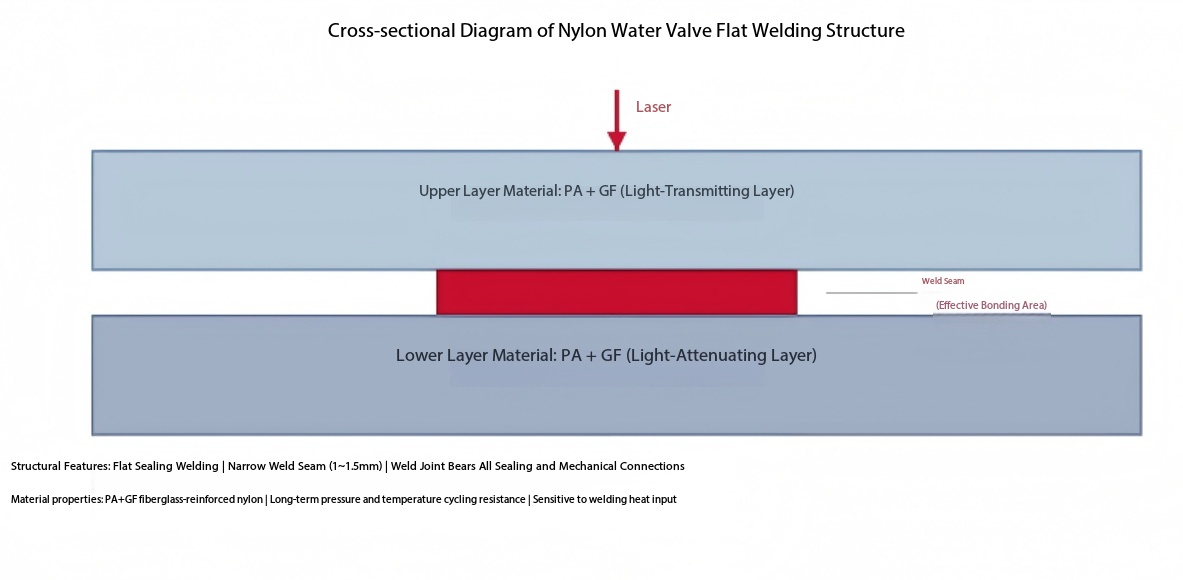
Figure 2: Schematic cross-section of the planar welding structure of a nylon water valve
During the experiment, process validation was first conducted using various welding parameter combinations; the EWR of each weld specimen was then measured via OCT inspection; ultimate strength was verified through burst testing; and long-term reliability was assessed using durability tests such as temperature cycling and pressure pulsation.
The experimental results demonstrate a clear positive correlation between EWR and explosive strength: higher EWR values correspond to greater explosive pressure and more stable mechanical strength. Additionally, EWR is closely related to long-term durability; products with lower EWR are more susceptible to microcrack propagation under temperature cycling and pressure fluctuations, leading to premature failure.
These results demonstrate that non-destructively obtained internal quality data of welds can effectively predict the final mechanical properties and long-term reliability of products. Consequently, EWR is no longer an abstract internal indicator but a quantifiable quality parameter directly linked to product performance.
V. From random sampling to 100% comprehensive inspection: Each product is accompanied by quality data
Traditional quality control relies on sampling inspections, which cannot cover every individual product. For high-reliability components such as nylon water valves, passing sampling tests does not guarantee the long-term stability of batch-produced products. Therefore, the objective of quality control should shift from "passing random inspections" to ensuring that "every product can be inspected and traced."
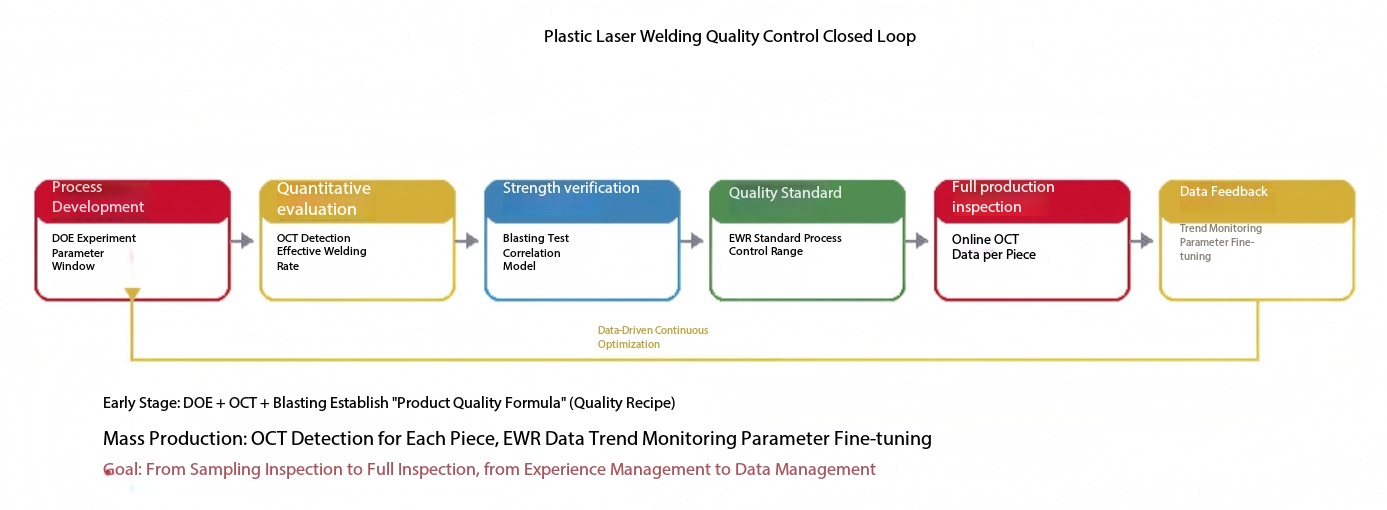
Figure 3 Closed-loop quality control system for plastic laser welding
During mass production, online non-destructive testing enables the creation of a unique EWR quality profile for each component. This means:
Each product maintains a verifiable weld quality record; any EWR-defective products can be identified and isolated in real time; batch quality trends are promptly detected through data monitoring to prevent issues from escalating; when a product fails at the customer site, specific quality data and production batch can be traced.
The transition from random sampling to 100% comprehensive inspection has not only expanded the scope of quality control but also transformed product quality from "probabilistic compliance" to "data-driven controllability".
VI. Product Quality Formulation: Establish dedicated quality standards
The EWR is not a universally applicable fixed threshold. Different products vary in terms of material composition, glass fiber content, weld rib dimensions, structural configuration, stress conditions, and operating pressure; consequently, the 90% EWR may correspond to distinct explosion pressures and reliability levels for different products.
Therefore, each product requires the establishment of its own "Quality Recipe." This recipe should include: EWR target values and process acceptance criteria; the relationship between EWR and blast strength; correlation data between EWR and durability performance; process control ranges; and abnormal response mechanisms.
Through preliminary DOE experiments, OCT measurements, blasting validation, and durability tests, companies can establish a customized EWR-performance relationship model for each product. This "one product, one model" approach forms the foundation for targeted quality control.
VII. Data-driven Performance Traceability: Ensuring Truly Controllable Quality
Once each product possesses independent EWR data and is linked to performance metrics such as blast resistance and durability, quality management enters the stage of data-driven traceability.
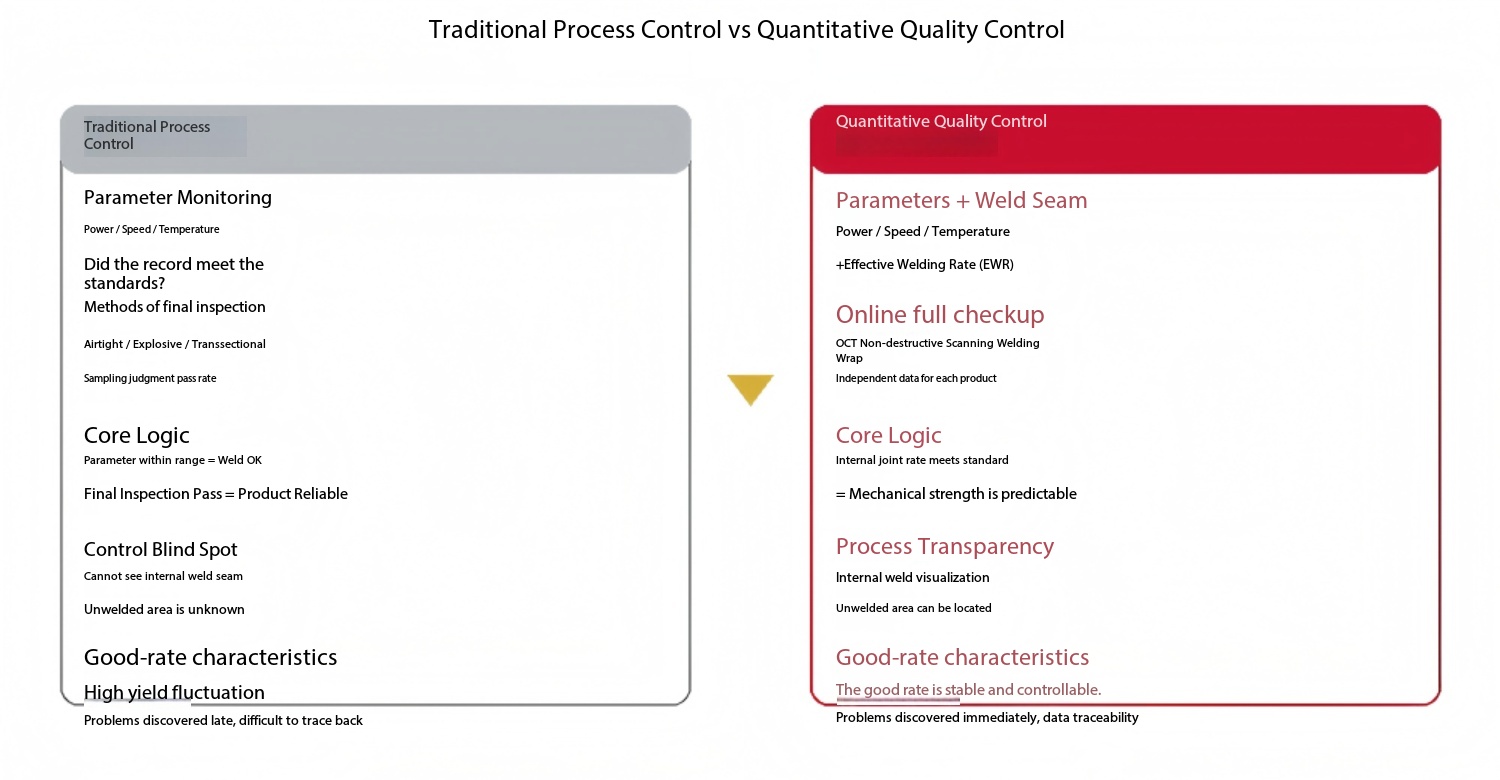
Figure 4 Traditional Quality Control vs Data-Driven Quality Traceability
Under a data-driven traceability system, enterprises can:
Product Performance Prediction: Predicts explosive strength and service life based on EWR data; Quality Threshold Optimization: Dynamically adjusts EWR acceptance criteria according to actual performance data; Rapid Fault Diagnosis: Identifies potential process or material causes using historical data when anomalies occur; Customer Audit Support: Provides end-users with traceable, quantifiable quality evidence.
This data-driven quality management approach enables enterprises to move beyond reliance on empirical judgment and instead make decisions based on factual evidence, thereby truly ensuring controllable product quality.
VIII. Future: Building a Quality Data System for High-Reliability Applications
With the increasing demands for plastic laser welding reliability in fields such as new energy vehicles, energy storage systems, and industrial fluid control, relying solely on traditional testing methods is no longer sufficient. In the future, the industry needs to establish a more systematic quality data framework.
Currently, leading companies in automotive thermal management, electronics, and high-reliability plastic components have reached a consensus in this field and are collaborating with Wacker Ray. By accumulating extensive samples across various material systems, product configurations, and operating environments, they are continuously developing data models that link EWR properties with burst strength, fatigue life, sealing reliability, and long-term durability.
The ultimate goal is to transition plastic laser welding from a "result-based evaluation" approach to one that integrates "performance prediction and data traceability," thereby providing quantifiable quality assurance for every product.
———
epilogue
For critical components of thermal management systems such as nylon water valves, true control over weld quality relies on quantitative assessment of the "internal bonding state within the weld." The OCT digital weld quality evaluation system links internal weld quality with ultimate performance characteristics—including burst resistance and durability—through its core metric, Effective Weld Rate (EWR), thereby enabling a transition from sampling inspections to 100% comprehensive testing and from empirical judgment to data-driven traceability.
Only when each product possesses its own quality data and quality trends can be monitored and predicted in real time, can plastic laser welding truly meet the demands of high-reliability application scenarios. This represents not only an advancement in quality control methodologies but also a significant step toward digital manufacturing for the entire industry.
 Home
Home Products
 Telephone
 Message


